
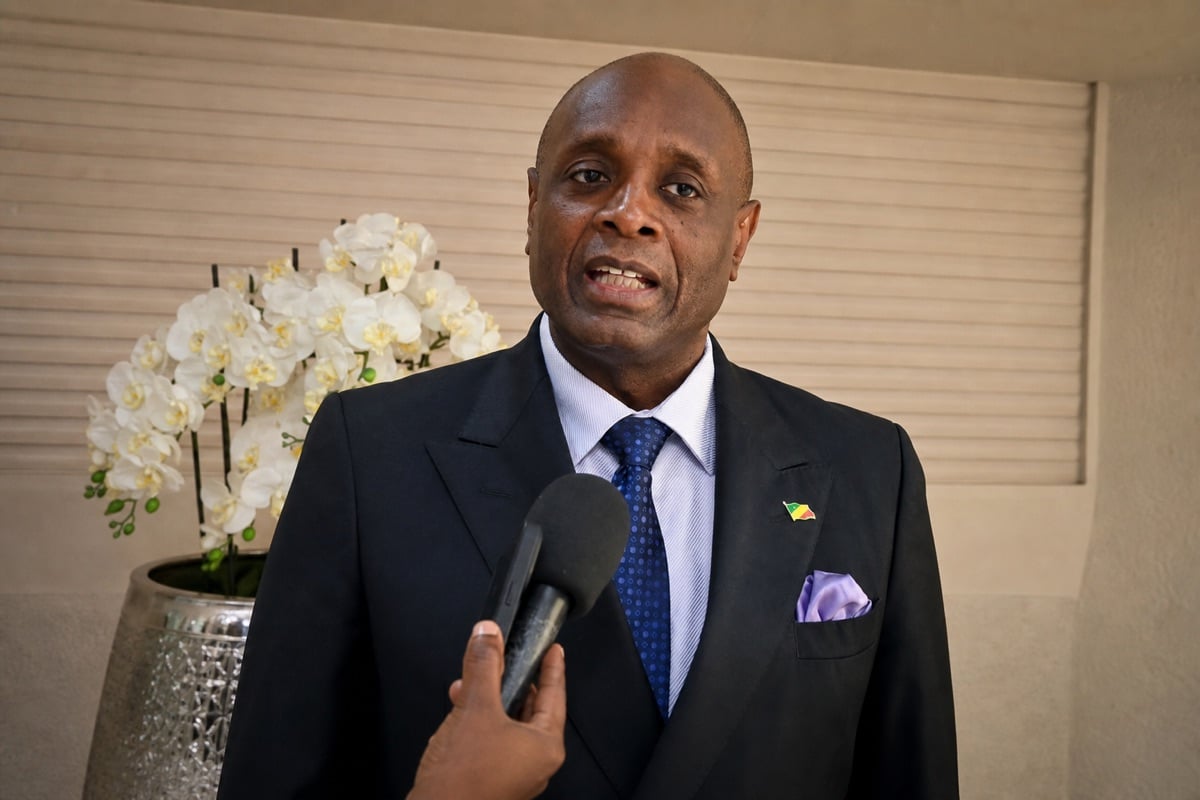
Congo-Brazzaville has placed its foreign policy in experienced hands. Constant Serge Bounda has been named minister of foreign affairs within the new government, a choice that signals continuity of expertise at the head of the country’s diplomacy.
The appointment came as part of the government formed after the investiture of President Denis Sassou N’Guesso, under the direction of Prime Minister Anatole Collinet Makosso. It places diplomacy among the portfolios entrusted to a seasoned figure.
Bounda arrives with a record built over years rather than months. His profile, weighed against the demands of the post, frames the appointment as a bet on professional depth in a region where stakes shift quickly.
A career forged across institutions
Bounda is described as an experienced diplomat who has cultivated expertise in international relations and African geopolitical questions. That knowledge was gathered across several arenas rather than a single office.
His path runs through public administration, where the machinery of the state shaped his understanding of how policy is made and executed at home before it is projected abroad.
It also passes through international missions and the United Nations system, exposure that gave him a vantage on multilateral diplomacy and the codes of negotiation that govern dealings among states.
The challenges laid before him
The new minister inherits an agenda with clear priorities. Strengthening economic partnerships sits near the top, reflecting a diplomacy increasingly measured by trade and investment rather than protocol alone.
Diversifying diplomatic alliances forms a second axis. The aim points toward a wider circle of partners, reducing reliance on any single relationship and broadening the country’s room for maneuver.
Burnishing Congo’s international image rounds out the early objectives. Perception abroad, the brief implies, is itself a resource that careful diplomacy can cultivate or squander.
Central Africa and its tensions
Beyond bilateral ties, regional management awaits. The minister is expected to handle crises in Central Africa, a neighborhood where instability in one state can ripple quickly across borders.
Promoting regional stability and cooperation accompanies that task. The framing positions Congo not merely as an observer of its surroundings but as an actor seeking to anchor calm within its immediate environment.
The combination of crisis management and cooperation reflects the dual face of regional diplomacy, where containing trouble and building partnerships proceed in parallel rather than in sequence.
A diplomacy meant to modernize
The choice of Bounda, according to the framing of the appointment, reflects the authorities’ intent to modernize Congolese diplomatic action. The emphasis falls on economic diplomacy as a central instrument.
Engagement of the diaspora features in that vision. Congolese communities abroad are cast as partners in influence, a constituency whose connections can serve the country’s interests far from home.
The strengthening of digital tools completes the picture. Diplomacy, the appointment suggests, is expected to operate through modern channels as much as traditional ones, putting technology in the service of international reach.
Reading the appointment
For a country embedded in the CEMAC space and attentive to its partners, the elevation of a UN-tested diplomat reads as a search for credibility. Experience becomes the currency of the post.
Whether the priorities translate into results will depend on execution over the mandate ahead. The objectives are stated; the test now lies in turning economic diplomacy and diversified alliances into tangible gains for Brazzaville.
