
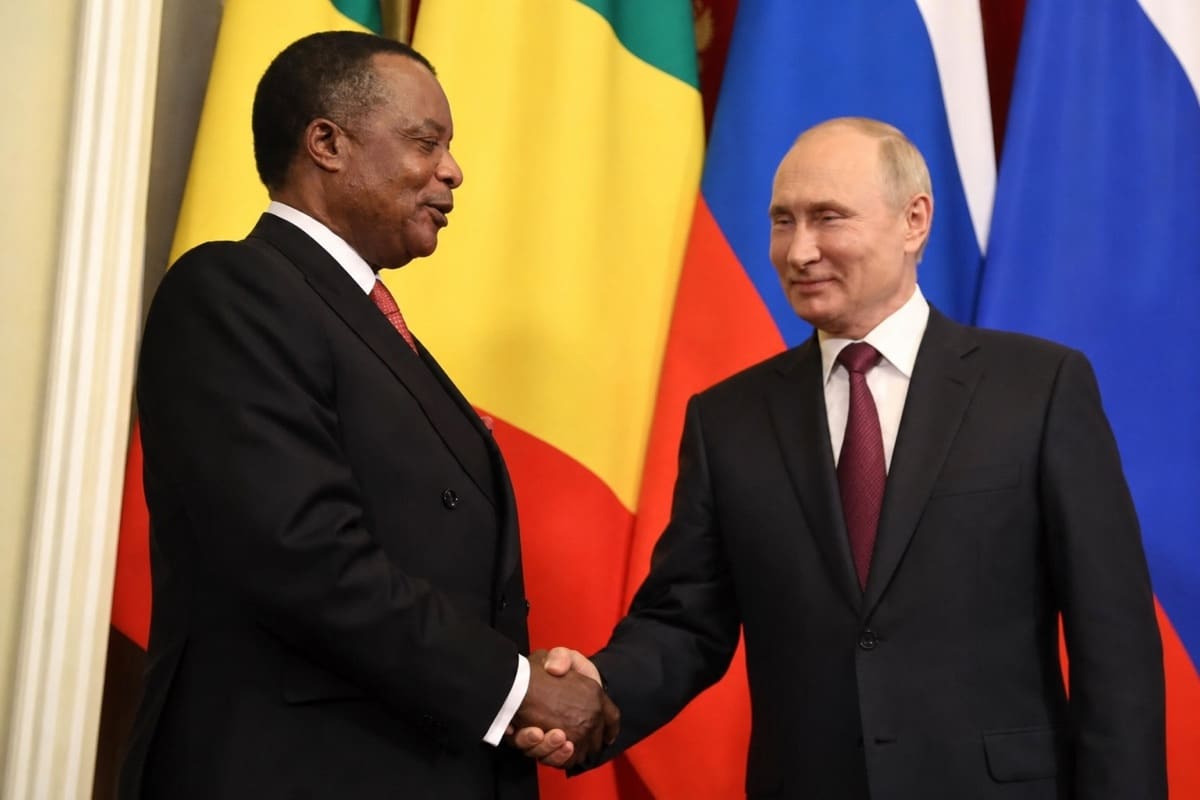
The diplomatic traffic toward Brazzaville continued to build in the days after the presidential vote. This time the message arrived from Moscow, carrying both ceremony and a measure of strategic intent.
Vladimir Putin, president of the Russian Federation, extended his congratulations to Denis Sassou Nguesso. The gesture came in a note described as solemn and weighted with a sense of long-term calculation.
A Message Timed To The Court’s Ruling
The Russian leader’s words followed a precise moment in the Congolese calendar. They came once the Constitutional Court had confirmed the re-election of the sitting head of state, lending the message a formal anchor.
That sequencing mattered. By waiting for the definitive results rather than the provisional ones, Moscow tied its acknowledgement to the close of the electoral process rather than its early hours.
The Numbers Behind The Victory
The presidential election held on 15 March 2026 delivered a decisive outcome for the incumbent. According to the figures proclaimed, Sassou Nguesso carried the contest with 94.90 percent of the votes expressed.
Such a margin left the final tally beyond serious dispute. The proclamation of these definitive results set the stage for the wave of international reactions, of which Putin’s note formed a notable part.
Two Capitals, Several Files
The substance of the Russian message rested on the bilateral relationship. Putin’s words underscored the quality of ties between Russia and Congo-Brazzaville, two states bound by cooperation across more than one domain.
That cooperation, as the message framed it, spans several fields. Among them sit defence, energy and the work of multilateral diplomacy, a combination that locates the relationship at the meeting point of security and resources.
Reading Moscow’s Gesture
The congratulations functioned as more than courtesy. In the language of diplomacy, a head of state’s prompt acknowledgement of a counterpart’s renewed mandate serves to signal continuity in the relationship between the two governments.
Here, the emphasis fell on durability. By stressing the solidity of Russo-Congolese relations, the message suggested a wish to carry the existing cooperation into the term that now opens before the re-elected president.
A Partnership In Motion
For Brazzaville, the arrival of such a message from Moscow adds to a portrait of a presidency that maintains varied external partnerships. The note placed Russia among the voices marking the start of the new mandate.
What concrete steps may follow remains, for now, outside the frame of the message itself. The text spoke to the strength of the bond rather than to any specific new undertaking between the two capitals.
The exchange nonetheless stands as a marker. It captures a relationship that both sides describe as established, and that Moscow, through its president, chose to reaffirm at a moment of political renewal in Congo (Les Echos Congo Brazzaville, 29 March 2026).
