
Congo-Brazzaville’s government has opened a fresh chapter in its fiscal year. Meeting in Cabinet, ministers examined a draft supplementary finance bill for 2026, a text meant to bring the year’s public accounts back in line with a shifting economic reality.
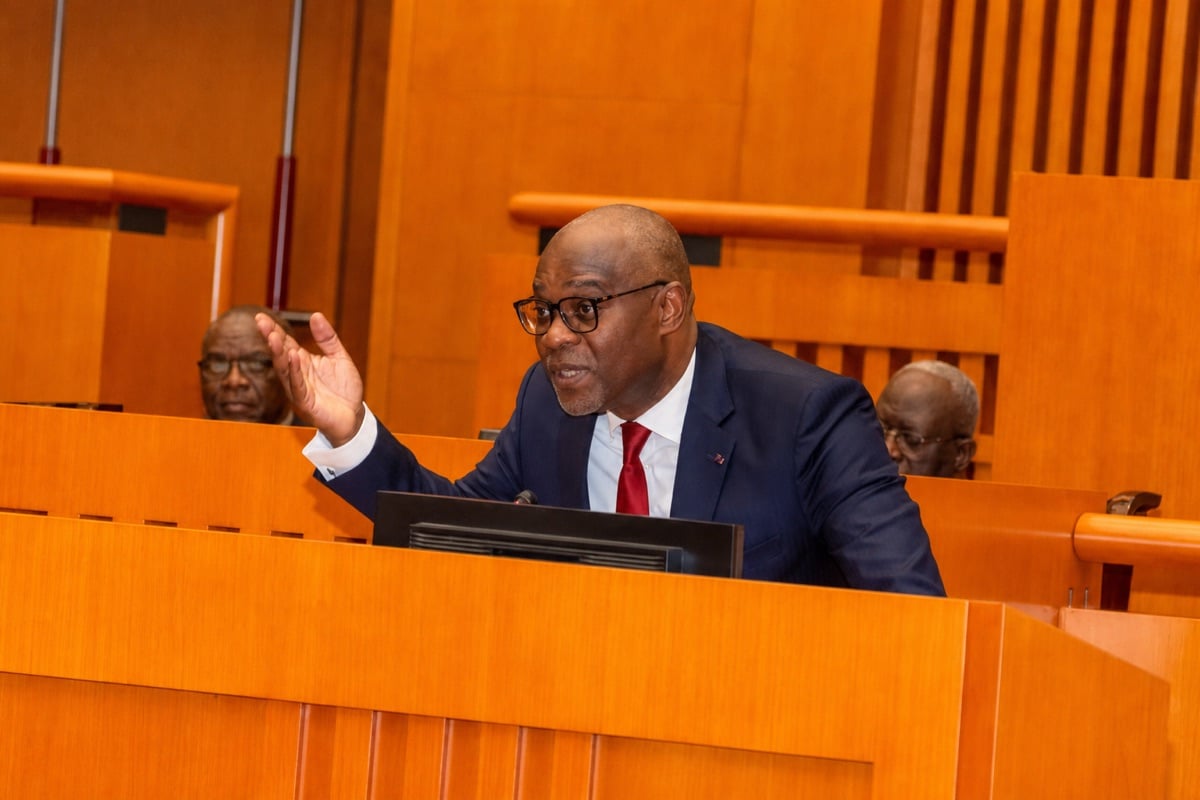
The bill was presented by Christian Yoka, the Minister of Finance, Budget and Public Portfolio. He steered ministers through the logic of the revision, the pressures behind it, and the choices now facing the state as it manages its resources.
A mid-year correction to a budget already voted
Supplementary finance laws are a familiar instrument in the management of public money. They allow a government to revisit a budget adopted at the start of the year, adjusting figures once the pace of the economy becomes clearer.
The initial 2026 framework was set months ago, built on assumptions about revenue and spending. Those assumptions rarely survive untouched. Prices move, financing needs emerge, and the state finds itself recalibrating what it had earlier committed to paper.
That is the exercise now under way in Brazzaville. Rather than a rupture, officials frame the revision as routine housekeeping, a technical alignment of ambition with circumstance. The tone from the Cabinet was one of continuity, not crisis.
Yoka lays out the case before the Cabinet
President Denis Sassou N’Guesso invited the finance minister to introduce the file. Yoka used the moment to set out the bill’s main orientations and the reasons that led the government to reopen a budgetary framework it had only recently approved.
His presentation stayed close to the mechanics of public finance. The revision, he explained, responds both to the domestic and international economic climate and to new demands on public spending that have surfaced since the original budget took effect.
The minister’s role here is partly pedagogical. Ministers around the table are asked not simply to approve numbers but to understand the trade-offs those numbers represent, from the resources the state expects to collect to the charges it must ultimately bear.
Preserving the balance the state values most
At the heart of the text lies a familiar preoccupation: equilibrium. The bill seeks to update the state’s resources and its charges so that the broad budgetary balances, the numbers that reassure creditors and partners alike, are preserved through the year.
For a country whose finances draw close attention from international institutions and lenders, that language carries weight. Maintaining balance is not merely accounting discipline; it signals to outside observers that spending remains anchored to what the treasury can sustain.
The revision also aims at execution. A budget is only as credible as its delivery, and the government presents the adjusted figures as a way to ensure that public programs are carried out more effectively over the remainder of 2026.
In practice, that means matching commitments to available means. Where the initial framework may have promised more than conditions now allow, or where new priorities have appeared, the supplementary bill offers a formal channel to reconcile the two.
What the vote sets in motion
Examination by the Cabinet is a first step, not the last word. Its passage through the Council of Ministers clears the way for the next institutional stages, chiefly the bill’s transmission to the competent bodies for adoption under the procedures in force.
Those procedures will determine how far and how fast the revised framework becomes law. For now, the government has signaled its intent and placed the text on a defined path, one that runs through the country’s established legislative channels.
The coming weeks will show how the figures are received and debated. Until then, the Cabinet’s review stands as a marker: an acknowledgment that the 2026 budget, as first drawn, needed a second look to match the year as it is actually unfolding.
A signal to watch for Congo’s partners
For businesses, investors and the international community present in Congo-Brazzaville, a supplementary budget is more than a procedural footnote. It offers a reading of how the state sees its own finances at mid-year, and where it intends to steady the ship.
The absence of dramatic announcements is itself informative. The government has chosen the vocabulary of adjustment and preservation rather than austerity or expansion, framing the revision as maintenance of a course already set.
Whether that framing holds through the legislative stage remains to be seen. The essential facts are modest but real: a bill examined, a minister’s case made, and a president’s endorsement given to a text designed to keep the year’s accounts coherent.
For readers across Brazzaville, Pointe-Noire and the departments, the immediate takeaway is straightforward. The state is revisiting its financial plan for 2026, and the machinery of adoption has begun to turn on a revision it presents as prudent rather than pressing.
