
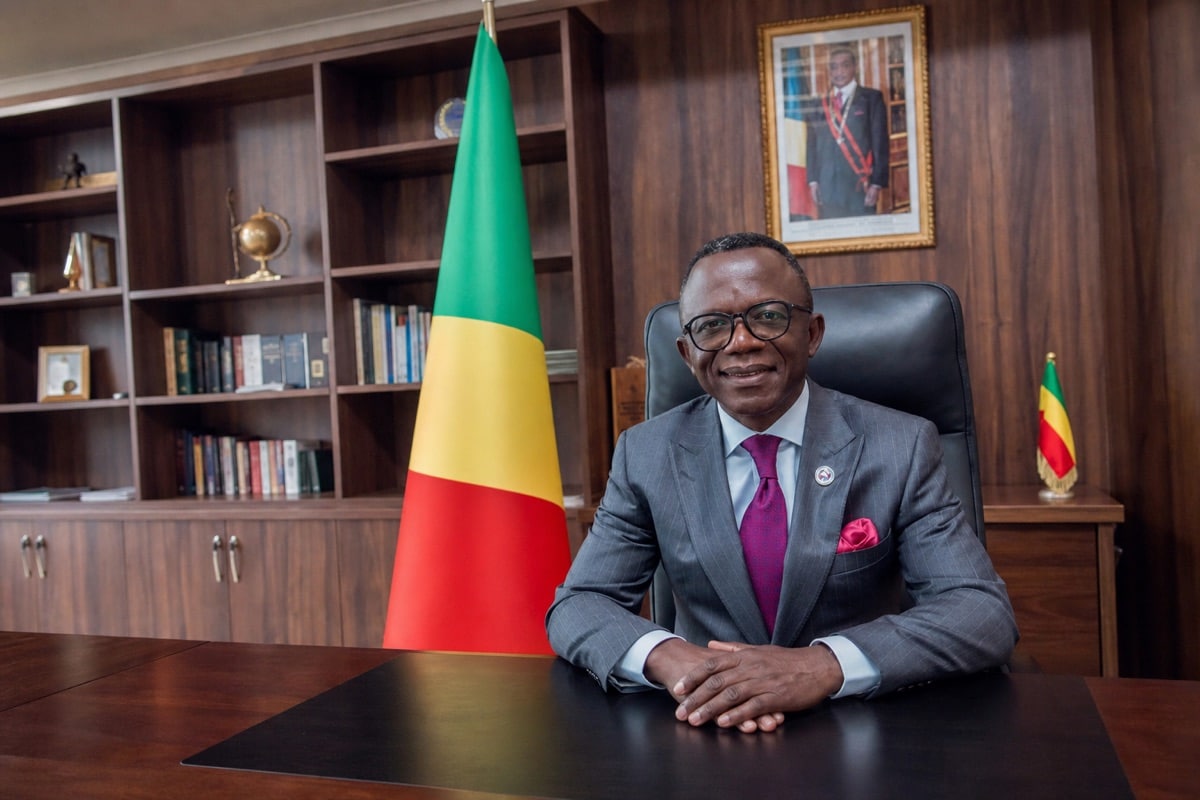
Congo-Brazzaville’s government has issued a firm denial of claims spreading across social media that Economy Minister Ludovic Ngatsé was detained in Paris. Officials describe the reports as fabricated and warn against the rapid circulation of unverified allegations online.
Government Rejects Viral Detention Claims
The rumors alleged that Ngatsé was stopped at Roissy-Charles de Gaulle airport carrying a large sum of money. According to those posts, French border police had reportedly seized roughly two billion FCFA from the minister as he moved through the terminal.
In its statement, the administration flatly rejected this account. It labeled the material as fake news and treated it as deliberate disinformation, stressing that no credible evidence and no confirmation from any competent authority supported the story.
The distinction matters. The government did not merely dispute a detail; it disputed the entire premise, from the alleged interpellation to the supposed seizure. Nothing in the official response left room for a partial version of the claims.
A Question Of Journalistic Rigor
Beyond the denial itself, the government used the episode to make a broader point about how information travels. Serious accusations, it argued, should rest on established facts rather than on assertions that gain traction simply because they are shared widely.
“Toute accusation grave doit reposer sur des faits établis,” the administration insisted, framing the case as a test of accuracy in a media environment where a single post can outrun any correction. The message was aimed at reporters and social media users alike.
That framing reflects a familiar tension. Claims involving a sitting minister and vast sums of cash carry obvious weight, and their reach can shape public perception long before verification catches up. Officials appeared keenly aware of that dynamic.
The statement did not name individuals or accounts behind the rumor. It focused instead on the substance, describing the allegations as unfounded and urging caution before grave charges are repeated or amplified without confirmation from the relevant authorities.
Where The Minister Actually Is
Against the backdrop of these claims, the government offered a straightforward account of Ngatsé’s whereabouts. The minister is on an official working trip in France, taking part in the Rencontres Économiques d’Aix-en-Provence, a gathering focused on economic discussion.
“Il n’a fait l’objet d’aucune interpellation,” the ministry’s communication unit confirmed, tying the correction directly to the source of authority within the government. The phrasing left little ambiguity about the official position on the matter.
The Aix-en-Provence forum draws policymakers, business leaders and analysts, and a minister’s presence there fits the ordinary rhythm of economic diplomacy. Presented that way, the trip stands in plain contrast to the dramatic scene described in the online rumors.
Reading The Episode
The confrontation illustrates how quickly a claim can circulate and how deliberately a government must respond to contain it. By addressing each element directly, officials sought to close the space in which speculation might otherwise continue to grow.
For readers in Brazzaville, Pointe-Noire and the wider Congolese diaspora, the takeaway is measured rather than sensational. A rumor surfaced, the government answered it point by point, and the minister remained on a documented professional agenda abroad.
What the statement did not do was speculate about motive or origin. It confined itself to the facts it could assert: the denial of any detention, the rejection of the seizure claim, and confirmation of the minister’s participation in a scheduled event.
That restraint may itself be part of the message. Rather than matching the rumor’s intensity, the administration leaned on plain confirmation, presenting its version as the verifiable one and leaving the burden of proof with those who first advanced the claims.
The episode adds to a longer pattern in which figures in public life must contend with allegations that spread faster than they can be checked. How institutions handle such moments often shapes trust as much as the underlying facts they are defending.
For now, the official record is unambiguous. The government maintains that the reported interpellation never happened, that no funds were seized, and that Ngatsé is engaged in economic talks in Aix-en-Provence as originally planned (Les Échos Congo Brazzaville).
