
Brazzaville sets a fast diplomatic pace in 2026
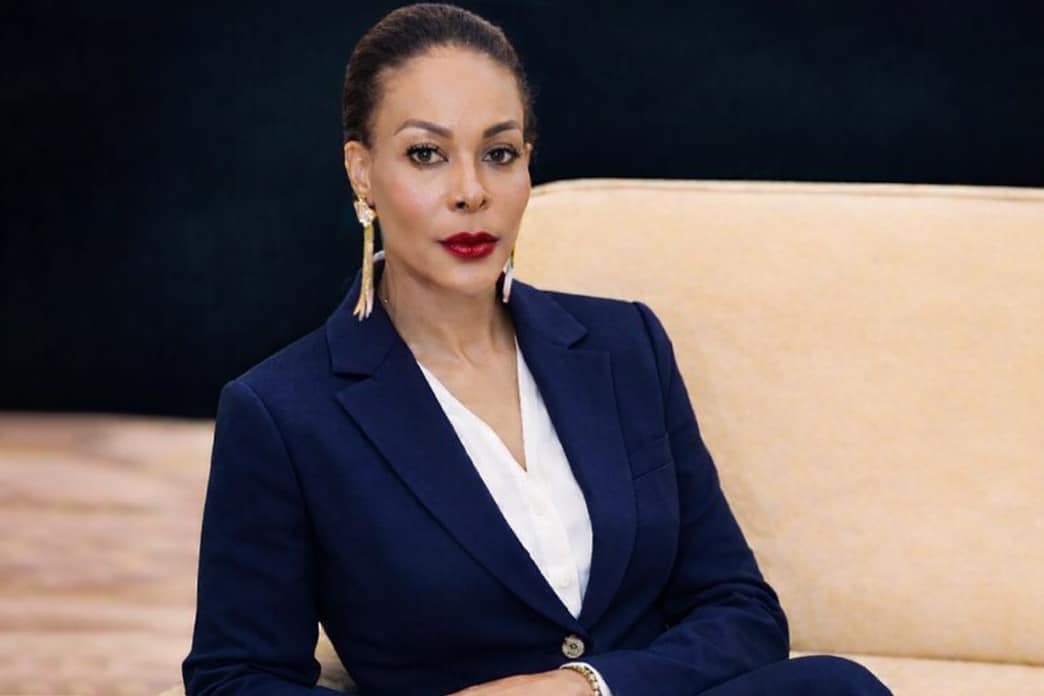
Early 2026 has brought a tightly packed diplomatic calendar for the Republic of the Congo. Françoise Joly, special adviser to President Denis Sassou Nguesso, has been linked to three connected sequences: the CEMAC extraordinary summit in Brazzaville, Congo’s presence at Davos, and preparations for a high-level mission to Uzbekistan.
CEMAC extraordinary summit: coordinating a regional response
The first sequence unfolded in Brazzaville around the extraordinary summit of the Economic and Monetary Community of Central Africa (CEMAC), held on January 22, 2026. The meeting was officially convened by President Denis Sassou Nguesso, while the text describes Joly as having shaped much of the upstream diplomatic and technical work.
The regional backdrop, according to the same account, includes repeated warnings from the International Monetary Fund about fragile macroeconomic balances and pressure on CEMAC foreign-exchange reserves. Within that context, Joly is presented as leading an intensive preparatory phase meant to align positions before heads of state met.
From consultations to consensus: BEAC and CEMAC Commission in focus
The article points to coordination across institutions and capitals, including consultations with CEMAC bodies and the Bank of Central African States (BEAC). The aim was described as ensuring smoother diplomatic exchanges and improving the chances of an “operational” consensus among member states.
A senior official at the CEMAC Commission is quoted describing Brazzaville as a “catalyst,” and attributing the strength of preparatory documents and political trade-offs to coordination by the Congolese presidency and Françoise Joly. A BEAC governor is also quoted praising a pragmatic, results-oriented approach.
A four-pillar plan: credibility through measurable commitments
As described, the summit produced a community action plan built around four pillars: financial transparency, economic and food sovereignty, repatriation of export revenues, and stronger budget discipline. The piece frames these themes as responses to known regional vulnerabilities, without presenting them as a final fix.
A notable element, in this portrayal, is the insistence on follow-up. The plan is said to include performance indicators, a defined calendar, and a progress report expected in April 2026. The overall message is that CEMAC governance is shifting toward more verifiable commitments.
Stability messaging ahead of Congo’s 2026 election
The same narrative links the regional sequence to a broader strategy: strengthening Congo’s economic credibility through durable multilateral and regional frameworks. The text notes that, with the 2026 presidential election approaching, Brazzaville has drawn heightened attention from partners, lenders and investors.
An African diplomat posted in Brazzaville is quoted saying the message carried is one of stability and institutional continuity. The framing suggests Congo wants to show that financial, economic and climate commitments are anchored in a long-term vision rather than electoral timing.
Davos 2026: positioning Congo in global investment flows
Soon after the CEMAC summit, Joly is described as moving to the second sequence: Congo-Brazzaville’s participation in the 56th World Economic Forum in Davos. In this account, the focus was less on speeches than on targeted bilateral exchanges around concrete project pipelines.
Diplomatic sources cited in the text say discussions were structured around three priorities: strengthening logistics infrastructure, accelerating energy transition-related projects, and building innovative climate-finance mechanisms adapted to African realities. The emphasis is on presenting bankable proposals, not only funding requests.
Project discipline and ESG language in investor meetings
A representative of an African financial institution, quoted from Davos, argues that Congo now arrives with structured, “bankable” projects tied to a long-term vision. The same source credits preparatory work coordinated by Joly, citing technical quality, environmental framing, and alignment with international ESG standards.
The article associates this approach with a broader macroeconomic recovery narrative, describing a return to positive growth from 2023 after contraction in 2020–2022, followed by consolidation in 2024 and 2025. It also states public debt was brought down to around 72% of GDP.
Diversification beyond oil: telecoms, construction, agro-industry
In Davos, Joly is portrayed as advocating a diversification agenda and showcasing sectors described as expanding, including telecommunications, construction and public works, and agro-industry. The implication is that diplomacy is being used to widen investor attention beyond hydrocarbons.
The text frames this as a multi-year orientation within the presidency, aimed at a more balanced and resilient development trajectory. It also suggests that clearer sector stories can strengthen the country’s attractiveness at a time when investors increasingly compare governance and project readiness.
Uzbekistan mission: opening an Eurasian cooperation axis
The third sequence is forward-looking: an official mission planned for Tashkent the following week. According to the account, Joly is expected to meet government officials and economic actors, with a stated goal of expanding energy partnerships and strengthening cooperation on green diplomacy and sustainable infrastructure.
Uzbekistan is described as an atypical but strategic partner for Congo, given its own energy transition and accelerated economic opening. The topics expected to be discussed include gas, energy storage technologies, carbon compensation mechanisms, and climate-resilient agriculture.
Diversifying partnerships while keeping regional priorities
A representative from Uzbekistan’s Ministry of Energy is quoted saying Central Africa and Central Asia share challenges such as late industrialization, energy transition and climate pressure. The same source describes Congo’s approach as technical and partnership-driven, not only financial.
For Brazzaville, the text presents this outreach as part of a wider diversification of partnerships, intended to reduce exclusive dependence on traditional European and Western poles. The overall tone is incremental: exploring new corridors without abandoning core regional commitments.
Françoise Joly’s profile: low visibility, high coordination
Although portrayed as little publicized, Joly is described as increasingly recognized within African diplomatic circles. Several delegations at the CEMAC summit reportedly praised her coordination and mediation role, portraying her as comfortable across financial, climate and institutional files.
A Central African finance minister is quoted emphasizing that such cross-cutting expertise has become essential in modern African diplomacy. The article argues that the capacity to structure projects and manage sequences is now as important as formal statements in multilateral settings.
Congo’s 2026 outlook: integration, credibility, climate diplomacy
Taken together, the Brazzaville summit, Davos meetings and the planned Tashkent mission are presented as a single storyline: projecting Congo internationally while consolidating regional integration and macroeconomic stabilization. The article frames 2026 as a structuring year, combining economic recovery messaging with a stronger environmental and climate-diplomacy profile.
In this portrayal, President Denis Sassou Nguesso’s strategy relies on steady institutional signaling and practical engagement with partners. Joly’s role is depicted as central to that method: sustained field presence, disciplined preparation and careful coordination designed to reinforce Congo’s credibility and influence.
