
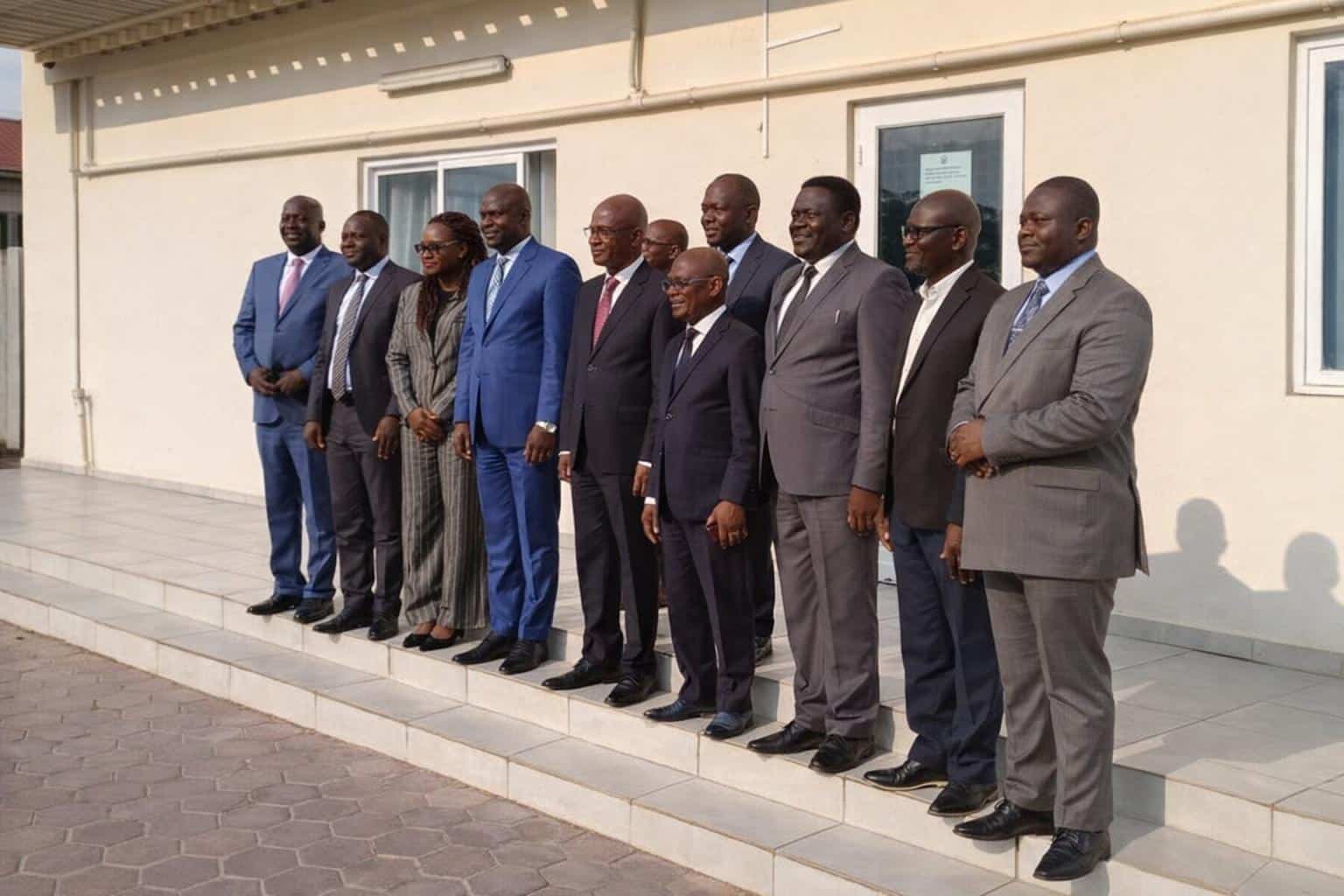
Brazzaville meeting validates a 2bn FCFA 2026 budget
The National Center for Training in Statistics, Demography and Planning (CNFSDP) held its second steering committee meeting on Jan. 5 in Brazzaville, ending with approval of its 2026 budget. The budget is set at 2 billion FCFA, balancing projected revenue and spending.
The session reviewed around ten agenda items under the chairmanship of Gabriel Batsanga, president of the center’s steering committee. Participants focused on governance priorities, financing choices and the operational steps needed to deliver planned upgrades over the year.
Government and World Bank financing tied to HISWACA
The CNFSDP’s 2026 envelope is co-financed by the Congolese government and the World Bank through the HISWACA project, described as “Harmonizing and Improving Statistics in West and Central Africa.” Officials said the funding structure is designed to strengthen training capacity aligned with national needs.
According to the adopted plan, the largest allocations will go to construction works and the installation of modern, fit-for-purpose equipment. These investments are presented as a practical response to growing demand for qualified staff able to produce and use reliable data in public and private institutions.
Infrastructure and equipment at the heart of the modernization plan
The steering committee signaled that bricks-and-mortar projects will remain central in 2026. New or expanded training facilities are expected to support both initial and in-service programs, with the goal of improving learning conditions and increasing the center’s ability to host larger cohorts.
Alongside construction, the budget places emphasis on equipment upgrades. The intent is to provide students and trainers with tools that match current professional standards in statistics, demography and planning, and to ensure training is connected to the realities of modern data production and management.
Digital learning: MOOC platform and a digital library
A significant portion of the budget is earmarked for a digital shift, including the creation of a MOOC platform for online teaching. The initiative aims to extend learning beyond physical classrooms and to make courses more accessible for students who need flexible training formats.
The plan also includes installing a digital library. For the center, access to up-to-date documentation is presented as essential to building strong analytical skills, supporting research-based teaching, and maintaining consistent training quality across different programs and academic levels.
Director general outlines priorities and expected support
Johs Stephen Yoka Ikombo, director general of the CNFSDP, said the committee’s approval gives a clear mandate for implementation. “We have received the blessing of the steering committee which validated the 2026 budget that will serve to digitize our services and all the different training pathways,” he said.
He added that another flagship action will be the construction of additional training infrastructure. “For this, we are counting on the support of the government and the World Bank, through the Hiswaca project,” Yoka Ikombo said, linking delivery timelines to continued partner coordination.
2026 activity program adopted to strengthen CNFSDP operations
Beyond the budget vote, the steering committee approved the 2026 activity program, a set of actions the center plans to carry out over the year to improve how it operates. The stated ambition is to move the CNFSDP toward a higher level of performance and visibility.
Participants framed that ambition in regional terms, with the center seeking recognition as a reference institution in statistics, demography and planning beyond the sub-region. The activity program is meant to translate that objective into practical measures and measurable outputs.
Governance review: 2025 report and 2024 financial statements
The meeting also addressed accountability items. Members approved the 2025 activity and financial report, along with the 2024 financial statements, signaling that the institution is keeping its internal reporting cycle aligned with committee oversight.
For an institution positioned within the national statistical ecosystem, these reviews matter because they connect spending choices to outcomes. The committee’s endorsements provide an internal reference point for following the implementation of investments planned under the 2026 budget.
Student performance and new intake for 2025–2026
The steering committee praised student results for the 2024–2025 academic year, citing a pass rate of 96.7%. The figure was presented as evidence of strong performance and a signal that the center’s training model is delivering high completion outcomes.
For the 2025–2026 academic year, the CNFSDP recruited 59 new students across bachelor’s and higher technician tracks. The intake is expected to feed into the national need for skilled practitioners, especially in data-driven public administration and private-sector decisionmaking.
CNFSDP role in Congo’s national statistical system
The CNFSDP is a public administrative institution tasked with providing initial and continuing training for senior staff working in public and private administrations within the National Statistical System. Its mission places it at the intersection of training, governance and technical capacity.
With a 2026 budget focused on facilities and digital tools, the center is positioning itself to broaden access and modernize delivery. If implemented as planned, the investments are expected to reinforce professional pathways in statistics and planning that support evidence-based policy execution.
