
Political landscape reshaped by legal compliance
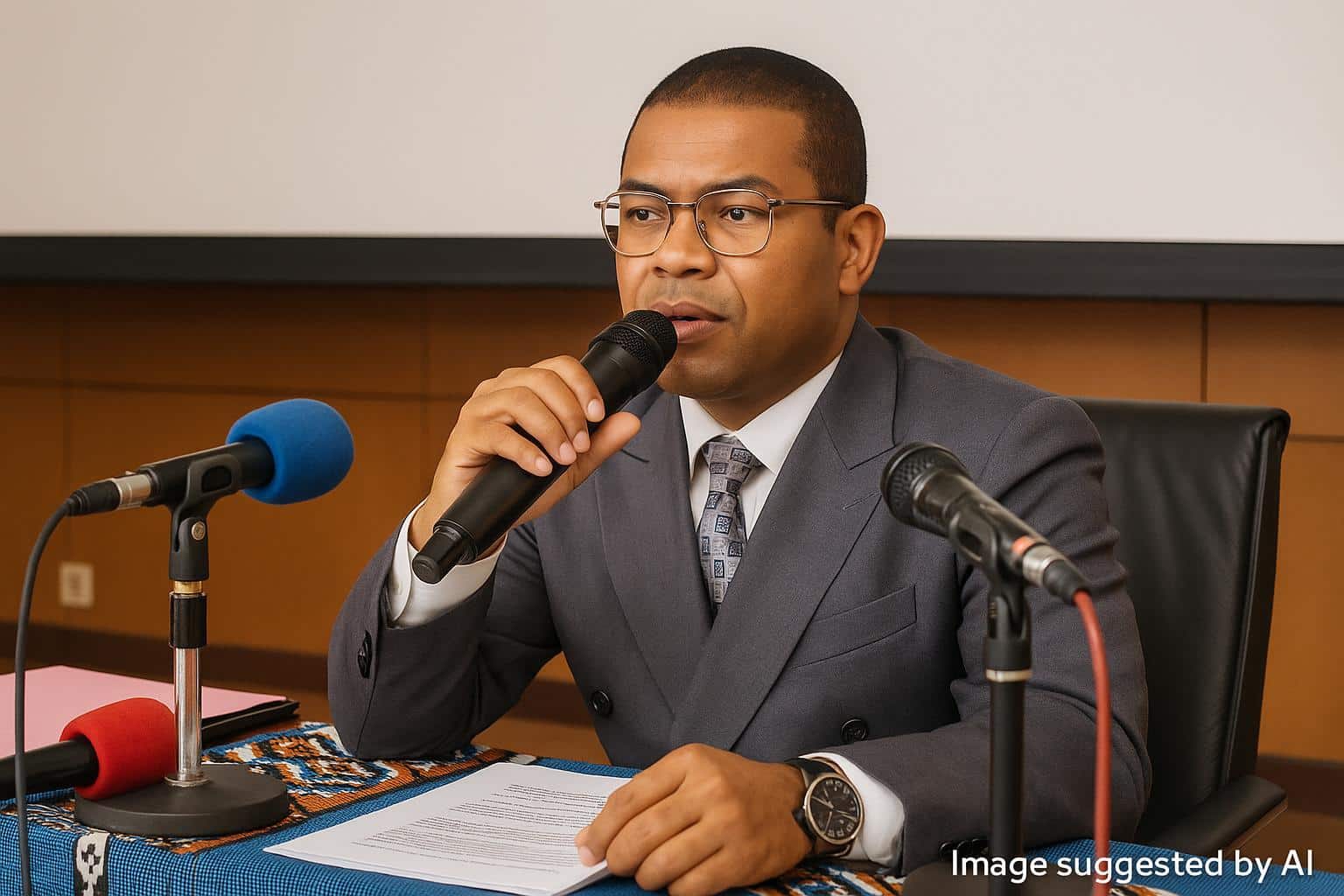
In a packed conference room of the Brazzaville prefecture, senior officials offered rare public clarifications on the status of political movements not yet registered under Congo-Brazzaville’s party legislation. The exchange, keenly followed by diplomats, signalled a decisive effort to standardise party life.
At the heart of the briefing stood Prefect Director-General for Territorial Administration Bonsang Oko Letchaud, flanked by legal advisers who waved copies of Law 20-2017 and its ministerial decrees. Observers noted the conciliatory, almost pedagogic, tone adopted toward sceptical party organisers.
Law 20-2017 sets the standard
Law 20-2017, promulgated six years ago, sets out detailed criteria for the creation, financing and internal democracy of political parties. Government lawyers argue the statute modernises a system once governed by scattered ordinances dating back to the early transition era.
Under the text, parties must demonstrate a national character, publish audited accounts and run gender-balanced executive committees. The requirement, officials stress, mirrors norms applied across the Economic Community of Central African States and aims to boost credibility with voters and donors.
Interior Ministry’s March Directive
On 4 March, Interior and Decentralisation Minister Raymond Zéphirin Mboulou issued a communiqué granting six months for every political formation to file updated dossiers. The deadline, he argued, ensured that the 2026 electoral cycle would unfold with clear lists accepted by all stakeholders.
Administrators say over two-thirds of parties met the paperwork cut-off, bringing the recognised tally to 73. Roughly 100 entities, however, missed at least one formal criterion, placing them on what the ministry calls an “awaiting compliance” register rather than on a blacklist.
July briefing offers reassurance
During the 12 July encounter, Mr. Oko Letchaud emphasised that unrecognised parties remain free to hold internal meetings and circulate publications, provided they inform prefectural authorities beforehand, a standard administrative notice applied to all civic associations.
He further disclosed the creation of a rapid-response review team designed to vet pending files within ten working days. “No political voice will be silenced for bureaucratic reasons,” he said, a statement later echoed on national television, Télé Congo.
Responses from party leaders
Despite the assurances, Maurice Kinoko of the Movement for Democracy and Change voiced puzzlement over his party’s absence from the provisional list. “I was registered in 2020 and suddenly invisible in 2025; perception matters,” he cautioned after the briefing.
Several representatives queried whether future campaign financing will favour parties already compliant. Officials replied that public subsidies, limited since 2015 fiscal reforms, follow objective budget lines and will become available only after the new roster receives presidential promulgation.
Insights from civil society and academia
Dr. Césaire Boka, political scientist at Marien Ngouabi University, views the drive as “a necessary audit” that could help filter dormant paper organisations. He notes that nearly half the unregistered groups lacked headquarters addresses or stable executive committees.
The bishops’ conference issued a mild statement welcoming transparent criteria while urging authorities to publish a circular explicitly guaranteeing freedom of assembly. In response, the prefecture hinted such guidance could accompany the finalised directory expected before Independence Day celebrations on 15 August.
How to regain compliance
To regain active status, parties must submit notarised statutes, a list of at least 2,000 founding members across ten departments, and proof of a bank account domiciled in the country. Digital submissions are now accepted through a portal launched in May.
Officials insist the process will not carry fees beyond standard fiscal stamps, dismissing rumours of costly intermediaries. They also pledge that decisions denying registration will include detailed reasoning, enabling parties to appeal before the Administrative Court within statutory deadlines.
Electoral timetable raises the stakes
Congo-Brazzaville heads toward presidential polls in mid-2026, preceded by local elections next year. Diplomats stationed in the capital suggest the current clean-up offers an opportunity to avoid last-minute disputes that have occasionally clouded past municipal contests.
The Independent National Electoral Commission is expected to rely on the ministry’s finalised list when accrediting domestic observers and printing ballots. Early harmonisation, analysts say, could shorten lead times for logistical contracts and reduce operational costs.
Regional parallels inform approach
Neighbouring Gabon recently dissolved thirty parties for administrative non-compliance, a move that met criticism from continental watchdogs. By contrast, Congo-Brazzaville’s approach has so far centred on persuasion, a difference some diplomats attribute to lessons drawn from earlier transitory dialogues.
Independence Day deadline ahead
Officials intend to publish the updated party register before 15 August, coinciding with the national holiday. Successful delivery would give municipal councils and civil society clarity well ahead of next year’s polls and may demonstrate administrative continuity amid regional volatility.
For now, the message from the Ministry of Interior remains consistent: compliance, not confrontation. Whether sceptical parties seize the window may shape the tone of the campaign season, but the legal framework guiding that choice appears firmly in place.
