
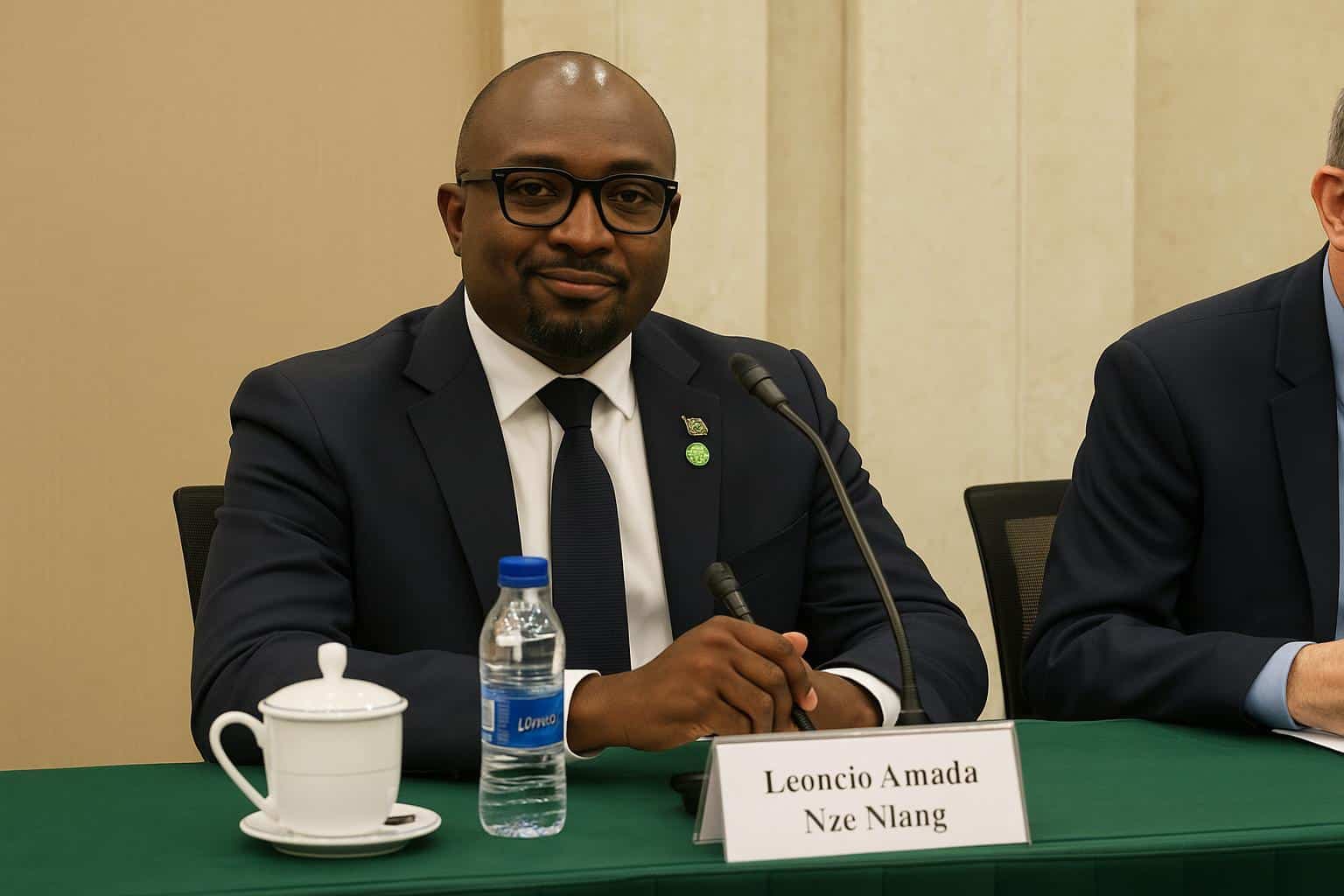
South-South momentum grows
Shanghai’s marble-lined World Expo Center hosted the third South Think Tanks Dialogue from 2-4 December 2025, a gathering that placed the spotlight on South-South cooperation as an engine of development. Africa’s delegation, led by the African Energy Chamber, pressed for deeper commercial, technological and policy linkages.
Speaking for the Chamber, Leoncio Amada NZE, its executive president for CEMAC and vice-chair of Equatorial Guinea’s economic council, argued that closer networks among nations of the global South could unlock sustained growth, move the continent beyond piecemeal gains and turn its mineral wealth into shared industrial value.
CEMAC energy ambitions
The call resonated with delegates from Latin America, Asia and the Middle East, yet it carried special weight for Central Africa’s oil and gas producers. Gabon plans to reach 220,000 barrels a day, while Congo-Brazzaville eyes 500,000 barrels and Equatorial Guinea seeks to monetize its stranded gas reserves.
Cameroun meanwhile is advancing new petroleum fields and electrification programmes. Progress, participants agreed, depends on attracting private capital, but the CEMAC zone has struggled since the bloc’s bank tightened foreign-exchange controls in 2022, compounding complex fiscal regimes and customs procedures.
Removing investment barriers
Amada NZE used the Shanghai podium to describe these hurdles as remediable. He urged the removal of administrative barriers, the alignment of trade standards and the building of cross-border logistics corridors, arguing that such steps would facilitate the free circulation of goods, services and skilled labour across African markets.
Stronger regional frameworks, he said, could also act as magnets for international investors seeking scale. “When project risks are shared by several states, capital becomes cheaper,” he remarked on the sidelines of the forum, citing multi-country pipelines under consideration between Congo, Gabon and Cameroon as illustrative opportunities for growth.
From aid to trade paradigm
The Chamber’s prescription fits within a wider continental mood. Policymakers increasingly frame South-South ties as complements, not substitutes, to existing partnerships with Europe, China or the United States. By pivoting from aid to trade, African governments aim to reinforce sovereignty while retaining room to cooperate with established technology suppliers abroad.
The session’s background papers estimated that harmonised customs alone could lift intra-African trade by double digits within five years, though precise data were not made public. Delegates cited the nascent African Continental Free Trade Area as a legal scaffold that could embed the energy projects CEMAC governments envisage.
Fiscal and technology levers
Still, fiscal design remains decisive. Investors follow predictable tax codes, argued panelists from private equity funds. Some recommended royalty- and profit-sharing models tied to field maturity, mirroring mechanisms already applied in Congo-Brazzaville’s offshore blocks. Others called for stabilisation clauses that shield capital from abrupt regulatory adjustments and policy shifts.
Technology transfer was another recurrent theme. According to Amada NZE, partnerships that pair African national oil companies with Southern engineering firms could nurture home-grown expertise while keeping costs competitive. He singled out gas processing as an area where modular designs from Asia might dovetail with Congo’s push for domestic power.
Logistics and infrastructure focus
Delegates also underscored logistics. The Gulf of Guinea’s shallow-draft ports and congested roads inflate delivery times, eroding margins for petrochemical exports. Proposals tabled in Shanghai included a regional shipping registry and coordinated dredging schedules, initiatives the Chamber believes could reduce freight costs for Pointe-Noire and Libreville alike in future.
While the dialogue unfolded far from Central Africa, Brazzaville’s policymakers followed proceedings closely. A senior official at the Hydrocarbons Ministry, requesting anonymity, said the event’s outcomes would inform ongoing reviews of Congo’s energy master plan, particularly the segment covering cross-border crude evacuation and regional gas-to-power pooling next year.
Economists weigh reforms
Economists interviewed after the forum viewed the Chamber’s messaging as pragmatic. “South-South trade already exceeds North-South flows in many commodities; institutionalising that trend is logical,” noted a researcher from the University of Douala. Yet he cautioned that reform momentum must be sustained once the headlines fade at home.
Funding, he argued, will hinge on credible policy signals. Multilateral lenders often take cues from ratings agencies, whose outlooks for several CEMAC states remain stable but fragile. Streamlined approval processes and transparent revenue management—areas already emphasised by Congo’s Ministry of Finance—could tilt the balance toward positive assessments soon.
Next steps for Congo and region
For the African Energy Chamber, the Shanghai dialogue capped a year of advocacy tours that took the body from Malabo to New Delhi. Each stop, Amada NZE said, reinforced the notion that the South’s demographic heft and raw materials can translate into bargaining power if harnessed collectively by aligned policies.
Whether policymakers seize that opportunity now rests on forthcoming regulatory reviews across CEMAC capitals. For Congo-Brazzaville, success would mean securing financing for its 500,000-barrel ambition while deepening integration with neighbours. The Chamber, for its part, pledges to keep the conversation alive as negotiators refine the necessary rules ahead.
