
Bilateral Political Warmth
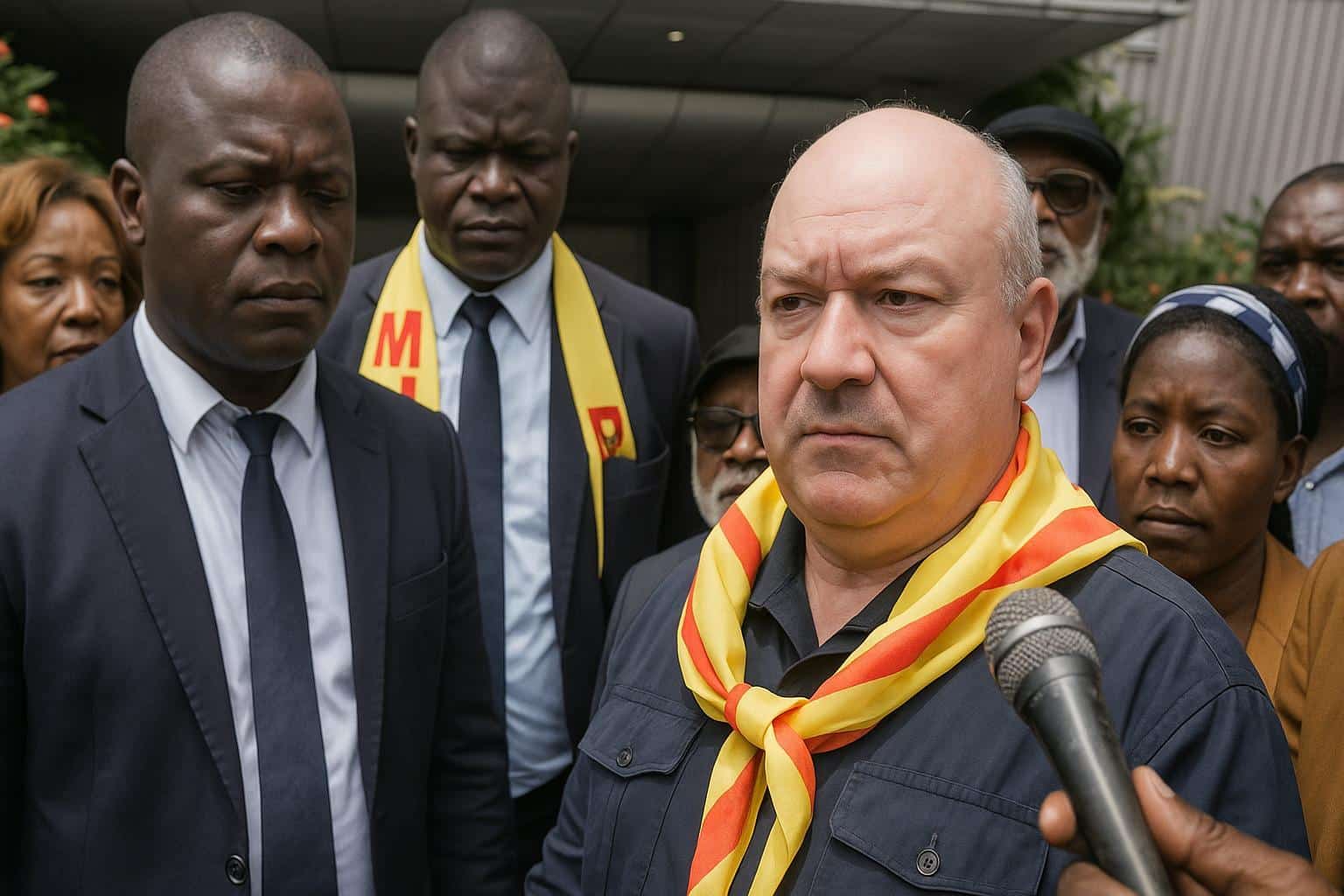
Sergueï Malinkovitch, leader of the Russian Communist Party’s parliamentary group, landed in Brazzaville on 9 November at the head of a lean yet vocal delegation, determined to breathe new energy into the historic cooperation linking Moscow and Congo.
The visitors’ first handshake was reserved for Donald Mobobola, president of the Presidential Youth Movement, or MJP, whose grassroots network has become a steady pillar of support for President Denis Sassou Nguesso. Both sides signalled that political chemistry could soon translate into structured programmes.
Speaking outside the People’s Palace, Malinkovitch told reporters the mission “fits our vision of solidarity with Congo,” echoing recent statements by Russia’s foreign ministry on diversified African partnerships. Mobobola, flashing a tricolour lapel pin, called the encounter “a page-turner for progressive forces.”
A Week of Strategic Workshops
Over seven days, the Russian lawmakers will trade notes with MJP coordinators on campaign organisation, social media messaging and vocational training schemes, according to a draft agenda shared by organisers. Closed-door sessions are scheduled in Brazzaville and Pointe-Noire, with field visits to youth entrepreneurship hubs.
An aide to Mobobola said joint working groups would map avenues for scholarships in Russian universities, echoing earlier cooperation in medical and engineering fields. The PCR plans to spotlight its youth wing’s community farming projects, hoping to inspire similar pilot plots along the Niari corridor.
Youth Dimension in Congo-Russia Ties
Congo’s demographic structure, with nearly 60 percent of citizens under 25, makes youth alliances politically precious. Analysts at the Centre d’Étude et de Prospective de Brazzaville argue that engaging movements such as the MJP helps anchor foreign partnerships in communities beyond ministerial boardrooms.
Euloge Landry, a political science lecturer at Marien Ngouabi University, notes that Russia’s outreach contrasts with Western programmes by emphasising ideological camaraderie. “The messaging is about sovereignty and social justice,” he said, adding that the approach dovetails neatly with President Sassou Nguesso’s inclusive governance narrative.
For the MJP, founded in 2015 during the presidential campaign, the alliance offers an international platform. Members say exposure to Russian campaign tools can sharpen domestic voter mobilisation ahead of local polls expected next year, while reinforcing loyalty to the head of state.
Shared Socialist Vocabulary
Both organisations ground their discourse in left-leaning values. Mobobola told our newsroom that the MJP “remains a friend of the global left, defending socialism’s humanist ideals.” Malinkovitch reciprocated, praising Congo’s historical role in the Non-Aligned Movement and its consistent call for multilateralism.
Yet officials carefully frame the dialogue within Congo’s multi-party architecture. Government spokesman Thierry Moungalla, asked about the visit, said exchanges are welcome so long as they support national development priorities articulated in the President’s 2022-2026 roadmap and respect republican institutions established by the constitution.
Economic and Cultural Side Notes
Beyond politics, the delegation will tour the Congo Terminal at the Port of Pointe-Noire, where Russian engineering firms supply equipment. According to port management, discussions may include maintenance training opportunities for young technicians enrolled in the MJP’s vocational arm.
Cultural diplomacy also features prominently. A joint concert by the National Orchestra of Congo and visiting Russian conservatory students is slated for Friday night at the French-Congolese Institute. Organisers say proceeds will fund musical instruments for public schools in the Pool and Cuvette departments.
Security and Global Context
Observers note the visit occurs amid shifting geopolitics, with Brazzaville balancing ties among traditional Western partners, China and an increasingly assertive Russia. Kremlin envoys have multiplied African engagements since the Russia-Africa Summit in St Petersburg last July, seeking allies on UN votes and new markets for technology.
Government sources stress, however, that Congo’s foreign policy remains pragmatic and non-exclusive. “Cooperation with the PCR does not replace relations with others,” a senior diplomat said, pointing to ongoing European Union programmes on renewable energy and American support for the Sangha-Lékoli rainforest conservation initiative.
What Comes Next
Malinkovitch hinted that the two parties could sign a memorandum of understanding before departure, potentially covering political education, language exchange and observer missions during future elections. Draft language seen by this publication underscores respect for Congo’s laws and the principle of mutual non-interference.
In parallel, the MJP executive committee will brief President Sassou Nguesso on recommendations emerging from the workshops. A participant disclosed that proposals include a bi-annual youth forum, joint social media campaigns against misinformation and a pilot digital literacy centre in Ouesso.
Analysts caution that translating goodwill into impact depends on resourcing and continuity. Previous training schemes with foreign partners sometimes faltered once delegations left. Both sides insist a permanent liaison office in Brazzaville, under discussion, would keep momentum alive.
For now, the optics of red flags mingling with Congo’s green, yellow and red have sent a message of solidarity at a time the region grapples with economic headwinds. The coming days will reveal whether that symbolism hardens into concrete projects benefiting young Congolese citizens.
