
Workshop puts spotlight on emerging patient rights
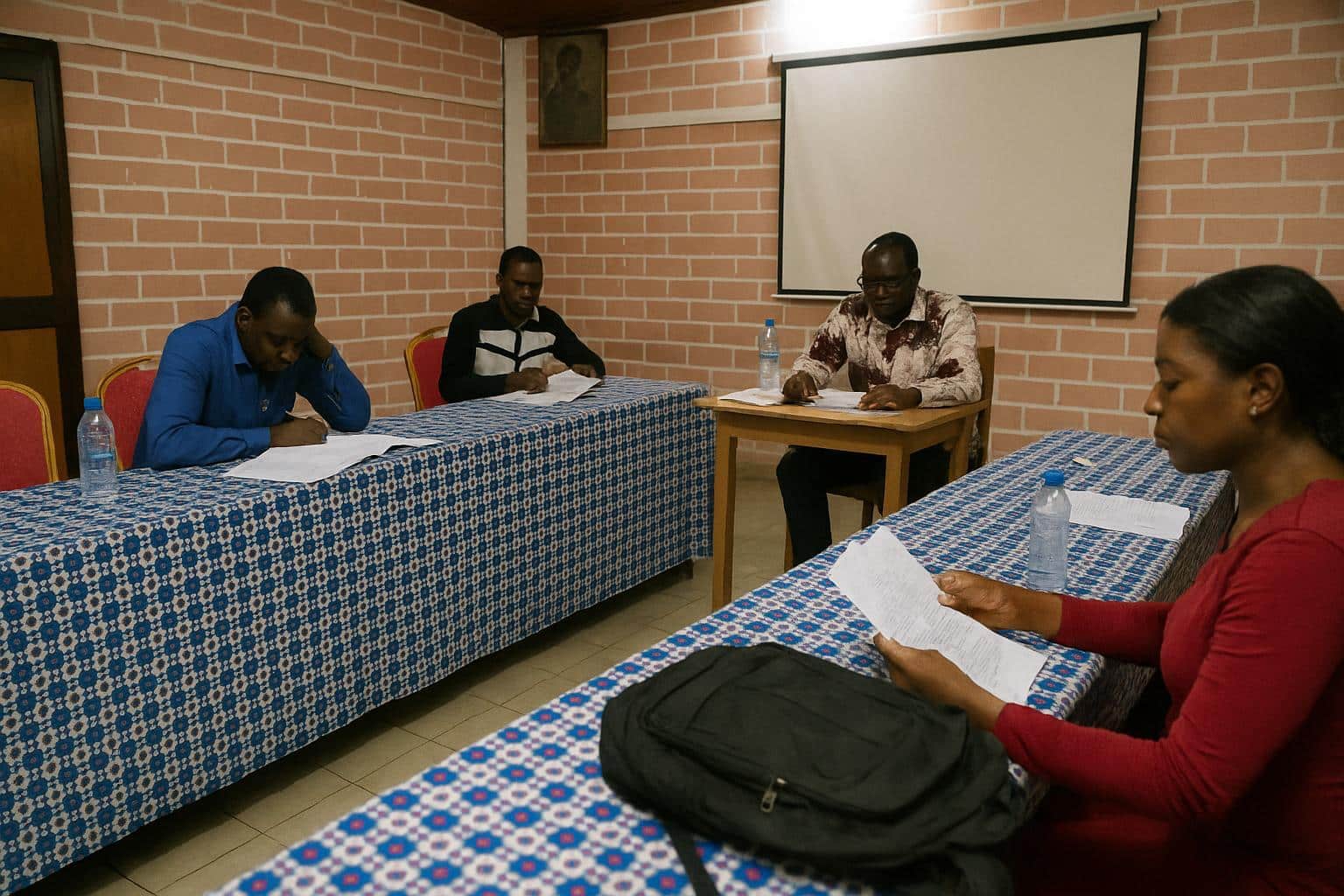
Under a blazing late-November sun in Brazzaville, twenty health professionals gathered at the headquarters of the African Centre for Peace, Education and Development to scrutinise a text that could soon redefine the treatment room conversation.
The observatory of Congolese consumer rights, O2CD, convened the session on 27 November 2025 to explain the still-draft Patient and Health-Service Users Charter. The body’s president, René Ngouala, framed the exercise as a bridge between caregivers and the public.
“A charter is like a church in the village square, visible to everyone,” Ngouala said, drawing nods from surgeons, nurses and insurance clerks.
Why promote a text not yet signed?
The charter has awaited executive signature since December 2024, lying on the government’s desk after six years of consultations with unions, insurers and civil-society groups. Funding partners recommended early outreach so hospitals are not caught unprepared once the decree arrives.
Fanol Ndouna, liaison officer for health-committee relations at O2CD, called the timeline pragmatic. “If we waited for promulgation, we would lose momentum and donor calendars,” he argued, noting that the European Union and WHO have earmarked modest grants for dissemination.
Such pre-signature popularisation mirrors practices observed in Ghana and Rwanda, where patient bills of rights circulated months before formal adoption (WHO Africa Regional Office).
A concise document with broad ambitions
The draft counts only 17 articles yet covers freedom of medical choice, confidentiality, informed consent, and shared responsibility. Chapter One sets general principles; Chapter Two lists rights; Chapter Three spells out duties.
Article 1 proclaims that patients may choose any physician in public or private sectors, subject to availability and the universal health insurance scheme, CAMU. Article 15 reminds users to respect visiting hours, staff workload and prescribed dosages.
Legal analysts at the workshop said the text draws authority from the 25 October 2015 Constitution – which declares health a fundamental right – and from the May 1988 code of medical ethics still guiding hospitals today.
Doctors weigh gains for clinical practice
Dr Pérès Malia, who oversees emergencies at Talangaï Hospital, hailed the charter as “a pocket compass” for both sides of the stethoscope. “It will not scrap existing rules; it will marry them,” he told reporters.
Malia believes explicit language on treatment adherence could reduce readmission rates linked to premature discharge, a challenge highlighted in the Ministry of Health’s 2023 annual review.
A senior nurse from Makélékélé District Hospital, requesting anonymity, said clear expectations might also ease conflicts that occasionally flare at payment desks when patients misunderstand coverage limits.
Legal safeguards already on the books
Congo’s basic law guarantees equal access to care, but enforcement often rests on internal hospital circulars. By codifying rights in a single public text, the charter could improve accountability without creating new litigation hurdles, observed jurist Agathe Mabiala.
She drew parallels with the French 2002 Kouchner Law, credited for reducing malpractice suits through better information. “Transparency is preventive medicine for courtrooms,” Mabiala quipped.
The Ministry of Justice, represented by magistrate Jules Ibéa at the workshop, signalled support for a document that “clarifies rather than complicates” the existing legal landscape.
Financing awareness beyond Brazzaville
O2CD’s budget for nationwide sensitisation stands at CFA 35 million, enough for radio spots in Lingala, Kituba and French, plus posters in 200 health facilities. Additional outreach in remote Sangha and Likouala departments will rely on mobile cinema units operated by UNICEF.
René Ngouala said provincial buy-in matters because “a right unread is a right unrealised.” He expects regional health authorities to select focal points before March 2026.
The World Bank’s Health System Strengthening Project, active since 2021, has expressed interest in printing leaflets if the charter aligns with its citizen-engagement indicators.
Balancing patient empowerment with resource limits
Some clinicians quietly worry that heightened expectations could outpace supplies. Brazzaville University Hospital still experiences medicine stock-outs, and emergency wards face bed shortages during malaria peaks.
Health economist Charles Okougba argued that rights instruments often act as levers for additional funding. “When standards are explicit, budget negotiators can quantify gaps,” he said, citing Kenya’s experience after its 2013 patient rights law.
Officials at the Ministry of Health declined to comment on budget implications but stressed ongoing investments in the CAMU scheme, which covered 1.4 million citizens by mid-2025.
Regional context and CEMAC implications
If signed, Congo would join Cameroon and Gabon in having a formal patient charter, potentially easing cross-border referrals within CEMAC. Insurance firms operating regionally, such as SAAR and Colina, welcome harmonised standards that simplify claims.
Public-health scholar Mireille Nzaba noted that mobile populations along the Congo-Gabon border often face administrative delays due to divergent consent forms. “A shared vocabulary of rights can speed up triage,” she said.
CEMAC’s secretariat in Malabo has offered technical assistance to align terminologies with its impending Mutual Recognition of Health Credentials Protocol.
Next steps toward promulgation
Participants left the workshop with a six-week action plan: integrate feedback into a final draft, circulate it through the ministries of Health and Social Affairs, and request cabinet scheduling before the first quarter closes.
Government sources familiar with the process say the charter could be adopted by decree rather than parliamentary vote, accelerating timelines while retaining legal force. Similar procedures were followed for the 2022 Essential Medicines List.
O2CD will meanwhile continue town-hall meetings in Pointe-Noire, Dolisie and Ouesso, seeking what Ngouala calls “ownership from port to forest.”
A cautious optimism in hospital corridors
For now, the charter remains a text in waiting, yet its principles are already seeping into staff briefings and patient orientation talks.
“Modernity isn’t only about equipment; it’s about relationship,” Dr Malia reflected as the workshop ended. “When patients know their rights and duties, half the cure is underway.”
With legal anchors steady and political winds favourable, observers predict that Congo’s hospitals could soon display the charter at their entrances, offering a tangible symbol of progress in the daily lives of citizens.
