
Judicial Resolve in Likouala’s Forest Frontier
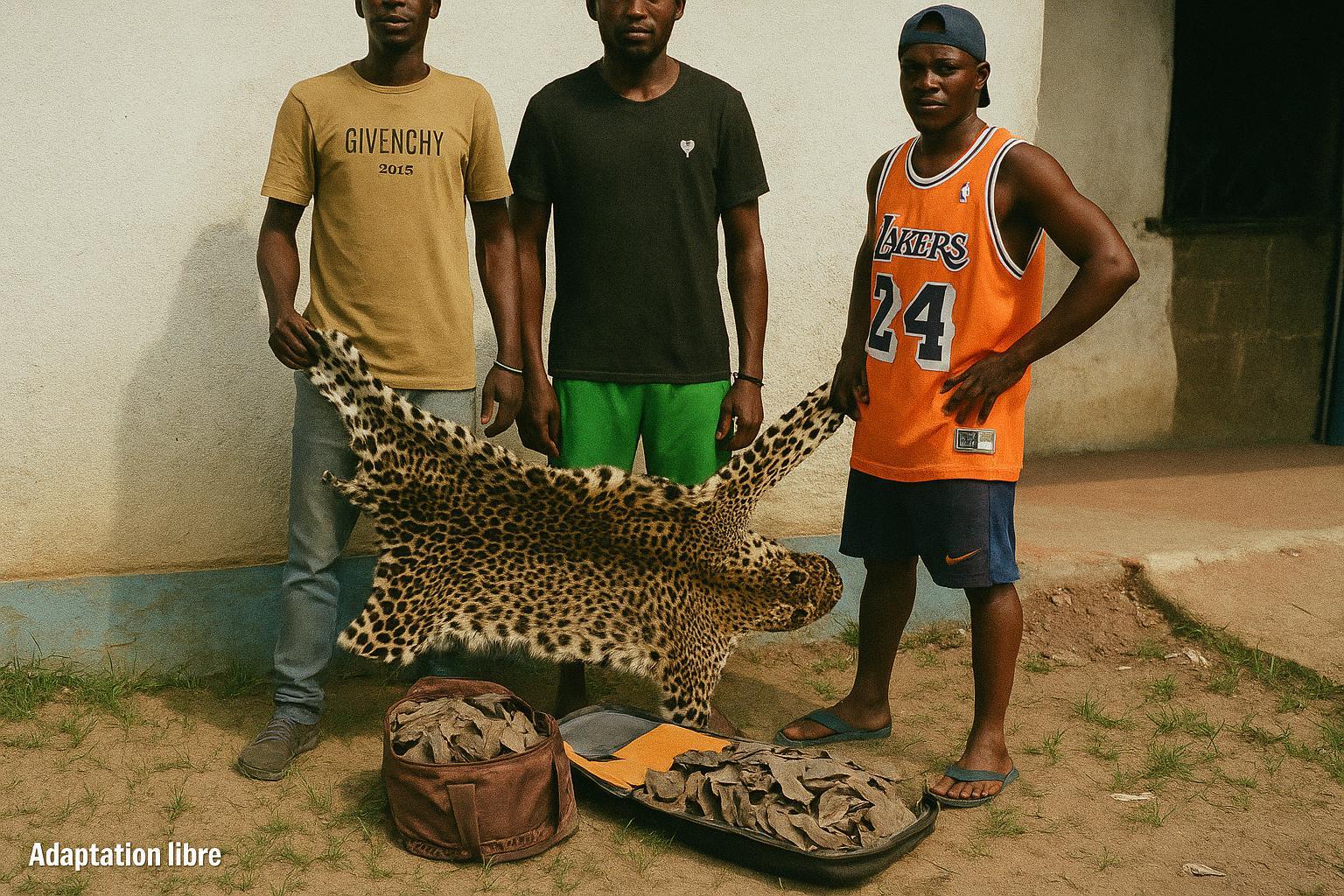
The town of Impfondo, hemmed in by the lush floodplains of the Likouala, rarely draws the international gaze. Yet the recent conviction of three residents—Parfait Mbekele, Jodel Mouandola and Arel Ebouzi—has reverberated far beyond the banks of the Oubangui River. After a series of tightly-argued hearings, the Tribunal de grande instance sentenced the men to terms ranging from two to three years, coupled with a joint fine of one million CFA francs and damages of three million. In a region where informal economies still shape daily life, the decision constitutes a notable assertion of judicial authority.
Applying Law 37-2008 to Protected Species
Congo-Brazzaville’s Law 37-2008 on fauna and protected areas expressly forbids the import, export, possession or transit of trophies from fully protected species, save for narrowly defined scientific exemptions. The confiscated items—a panther skin, four giant pangolin claws and several kilograms of pangolin scales—fall squarely within that category. Magistrate Marie-Gisèle Mavoungou reminded the courtroom that both Panthera pardus and Smutsia gigantea are listed on Appendix I of CITES, thereby carrying the highest level of international protection. Her pronouncement that ‘biodiversity is an asset of national sovereignty’ echoed commitments made by Brazzaville at the 19th CITES Conference in Panama last year (CITES proceedings, 2022).
Inter-Agency Collaboration Behind the Arrests
The arrests on 27 May were the culmination of a discreet operation orchestrated by the local gendarmerie and the Departmental Directorate of Forestry Economy, with technical back-stopping from the Wildlife Law Enforcement Support Project, funded in part by the European Union. Captain Aimé Etou, who led the sweep, commented that confidential community tip-offs were ‘essential in tracing the supply chain’ from Epéna to Impfondo. His remarks echo findings by the United Nations Office on Drugs and Crime that community intelligence remains the linchpin of successful anti-poaching actions in Central Africa (UNODC Wildlife Crime Report, 2020).
Regional Implications for Conservation Diplomacy
Likouala shares porous borders with the Central African Republic and the Democratic Republic of Congo, corridors long exploited by transnational trafficking networks. By prosecuting the case locally rather than transferring it to Brazzaville, authorities signalled confidence in provincial capacity and sent a calibrated message to neighbouring jurisdictions. A senior diplomat based in Bangui, requesting anonymity, described the verdict as ‘a constructive precedent that complements sub-regional initiatives under the Central African Forests Commission’.
Balancing Rural Livelihoods and National Commitments
Conservationists acknowledge that the trade in pangolin scales is fuelled partly by economic hardship in forest communities. Father Jean-Paul Okou, a parish advocate for sustainable livelihoods, cautions that ‘law enforcement must be paired with alternative income streams if we are to win hearts as well as cases’. His observation aligns with research by the Wildlife Conservation Society indicating that livelihood programmes reduce poaching recidivism by up to forty percent in comparable contexts (WCS Central Africa Brief, 2021).
Strengthened Governance and International Cooperation
From the perspective of Brazzaville’s diplomatic partners, the Impfondo ruling corroborates the government’s broader governance narrative. In July, Congo will submit its sixth national report to CITES, and officials are keen to showcase measurable enforcement outcomes. An adviser at the Ministry of Forest Economy noted that ‘credible domestic convictions enhance our leverage in climate finance negotiations’, a view increasingly echoed in multilateral carbon markets. By transforming an isolated courtroom drama into a demonstration of regulatory maturity, the Republic of Congo positions itself as a reliable steward of the Congo Basin, the planet’s second-largest rainforest complex.
A Forward-Looking Outlook for Rule of Law
Whether the sentences deter would-be traffickers will ultimately depend on consistent follow-through, including timely payment of fines and transparent handling of seized trophies. Nevertheless, in a region often portrayed as a weak link in the global fight against environmental crime, the Impfondo verdict offers a substantive counter-narrative. It underscores that rule of law can thrive even in the rainforest hinterland, provided that institutions are empowered, communities are engaged and political resolve remains steady.
