
Youth inclusion vision takes shape
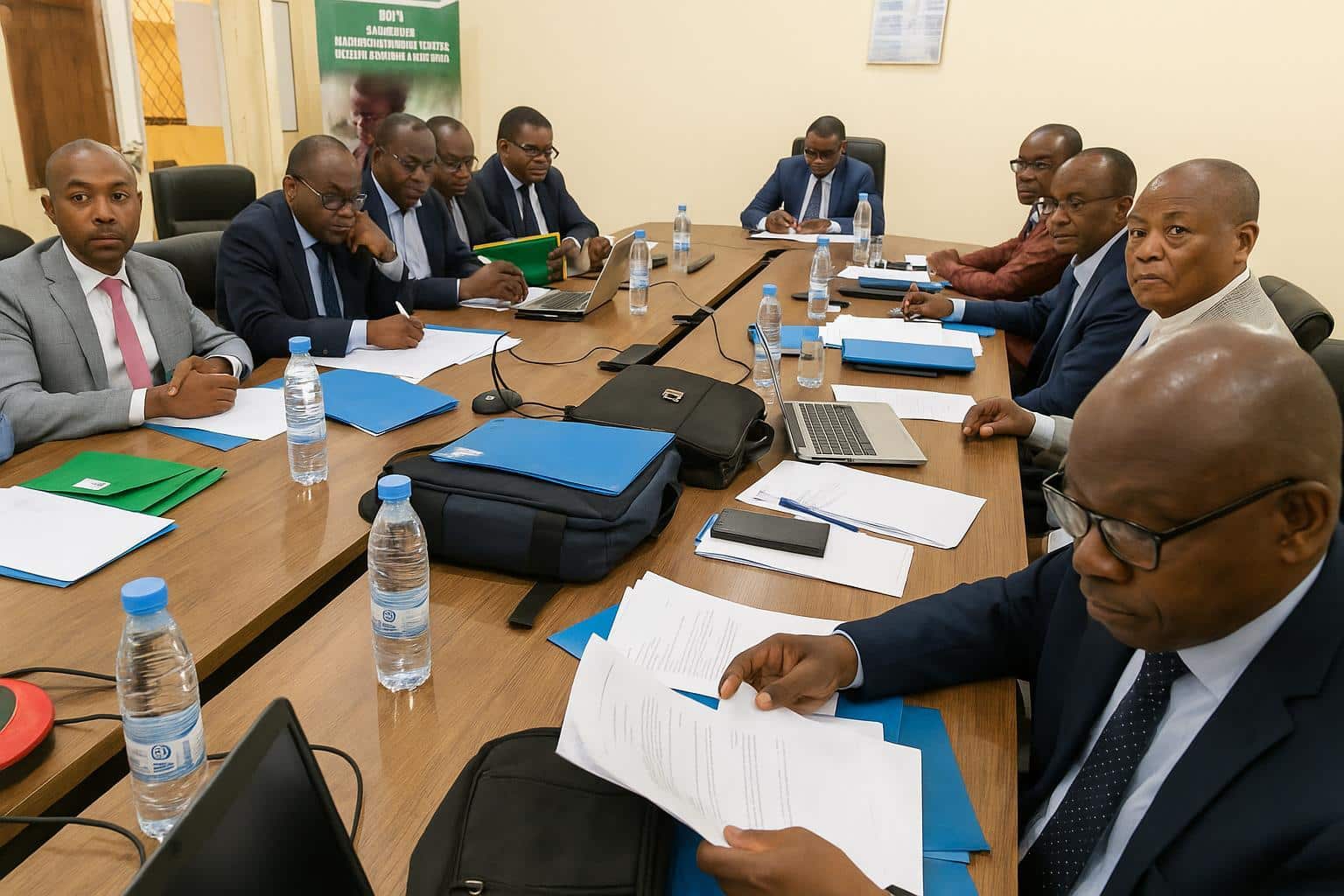
Brazzaville — The Republic of Congo is moving to accelerate youth employment through the Social Protection and Productive Inclusion Project, or PSIPJ. Meeting for its third steering-committee session, officials endorsed a roadmap that seeks to equip 45,000 young Congolese with marketable skills by 2026.
Of that total, 40,000 learners aged 18-35 will receive structured coaching to open or formalise micro-enterprises, while 5,000 will complete intensive training in trades identified as “high opportunity” by labour-market studies commissioned by the Ministry of Economy and the World Bank.
Budget signals firm financial commitment
The 2026 work plan, adopted on 26 December, lists 58 activities and carries a price tag of 44.1 billion CFA francs, roughly 73 million dollars at current exchange rates. Funding is secured through an International Development Association credit complemented by national counterpart resources.
Steering-committee chairman Sylvain Lekaka, who is chief of staff to the Minister of Economy, called the envelope “a strategic investment in social peace and inclusive growth”. He urged members to watch delivery costs closely so that “every franc finds its way to a Congolese youth in need”.
Digital registry at the project’s core
A single social registry, still under development, will underpin beneficiary targeting across all departments. The database will compile demographic, biometric and vulnerability data collected by local agents and verified by community committees, a model inspired by the Lisungi cash-transfer programme piloted over the past decade.
Technicians report that coding of the application is 80 percent complete, yet field deployment lags because connectivity remains patchy in several northern districts. The World Bank’s digital development team has recommended satellite links for pilot areas while fibre-optic extensions advance along the national backbone.
Logistics and cash-flow constraints
Beyond ICT, the project faces practical hurdles. Procurement delays have postponed delivery of training toolkits ranging from sewing machines to welding masks. Some centres also report late disbursement of transport and meal allowances, payments that are essential for trainees living on the economic edge.
Lekaka acknowledged the bottlenecks but argued they are “teething pains rather than systemic flaws”. He reminded agencies that the 2026 procurement plan covers 43 contracts, including 11 lots of equipment, and that the Public Contracts Directorate has pledged to fast-track reviews once files are complete.
Coaching and market matching
Recruitment of training providers and business-development coaches is now under way. Terms of reference seen by this newspaper stress hands-on mentoring over classroom lecturing, with performance fees tied to the number of start-ups that survive beyond twelve months or apprentices who obtain salaried positions.
To raise success rates, PSIPJ will link cohorts to municipal one-stop shops where business registration can be finalised in days, not weeks. The Chambers of Commerce in Brazzaville and Pointe-Noire have offered to host periodic job fairs so graduates can showcase products and services.
Steady gains since 2025
While the headline goal lies two years ahead, early indicators are encouraging. In 2025 the project transferred conditional cash to 10,581 households, injecting 1.26 billion CFA francs into rural and peri-urban economies. Field monitors say most of the stipends were spent on school fees and farm inputs.
Training figures also trended upward. Centres in Brazzaville enrolled 1,358 participants, Pointe-Noire 1,142, Dolisie 626 and Ouesso 390. Nationally, 4,926 young people completed at least one skills module, with an average completion rate of 87 percent according to interim data circulated by the steering committee.
World Bank country manager Cheick Fantamady Kanté, speaking by videoconference, praised the momentum. “Congo is demonstrating that social protection and productivity can move together,” he said. He encouraged managers to publicise graduate stories to inspire peers and reassure taxpayers of the programme’s tangible dividends.
Civil-society observers, including the Congolese Coalition for Youth Inclusion, welcomed the transparency of the new figures while cautioning that graduate tracking must be continuous, not ad-hoc. The organisation proposes a mobile survey every six months to capture income, business survival and satisfaction metrics.
Aligning with national development goals
PSIPJ dovetails with Pillar 3 of Congo’s 2022-2026 National Development Plan, which emphasises human-capital accumulation. Economists at the Observatory of Economic Conjunctures contend that a one-percent rise in youth employment could lift GDP growth by 0.3 percentage points, amplifying the macro-economic case for the initiative.
For now, the steering committee’s focus is operational. Its next meeting, set for March, will examine registry roll-out and the first batch of coaching contracts. “We must move in concert,” Lekaka reminded delegates, “so that by 2026 no willing young Congolese stands alone.”
