
Kinshasa prepares a first $750 million bond
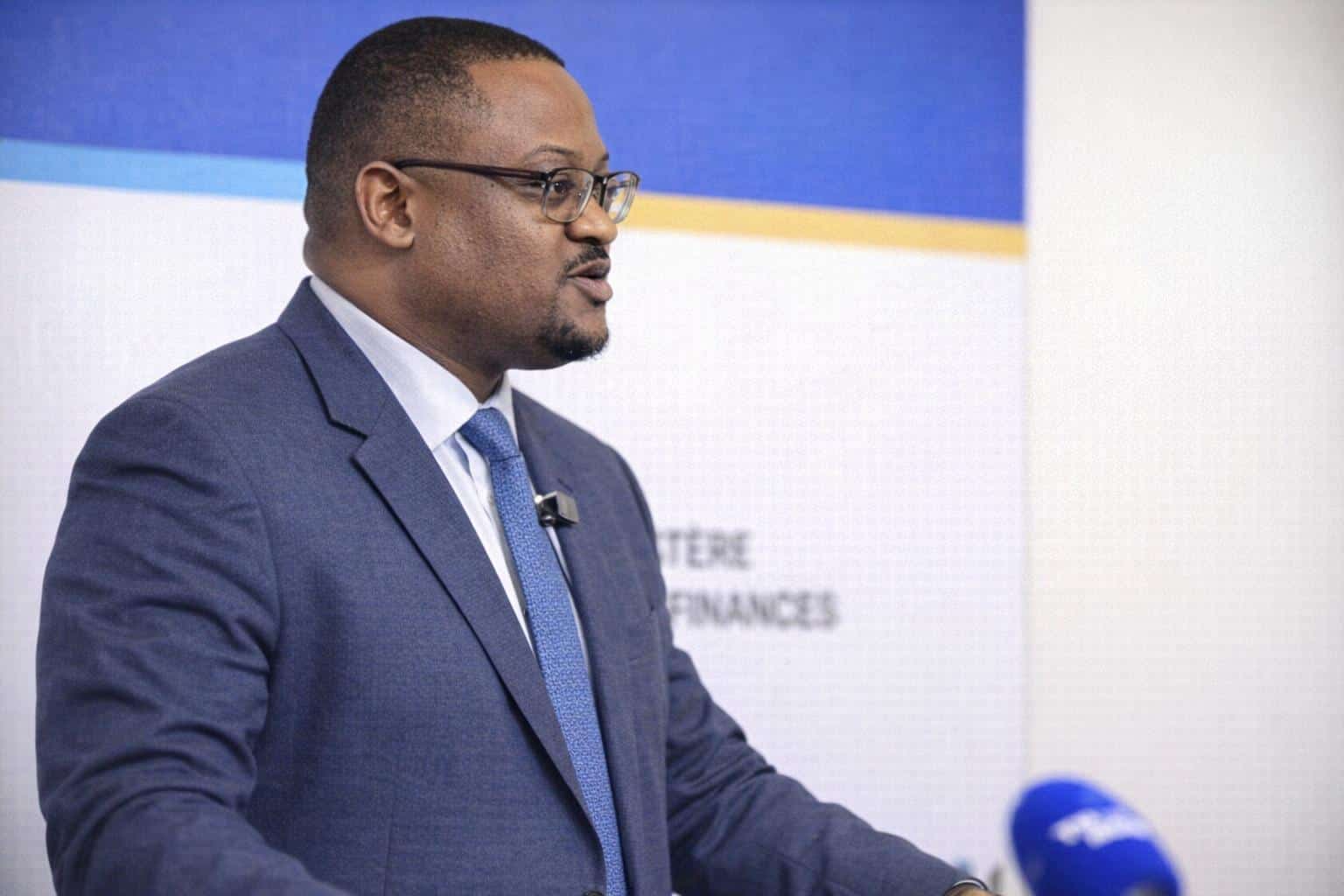
The Democratic Republic of Congo plans to return to international debt markets with its first bond issue of $750 million, expected in April, Finance Minister Doudou Fwamba Likunde said. The government says the proceeds are intended to finance infrastructure projects.
The planned transaction marks a notable step for Kinshasa as it seeks to broaden funding options beyond traditional sources. Officials describe it as a structured return to markets, built around a message of improving macroeconomic stability and clearer communication with investors.
A broader 2026 borrowing program up to $1.5 billion
The $750 million offering is presented as the first tranche of a larger program that could reach $1.5 billion across the whole of 2026. The government says it wants to spread out issuance over time to limit financial risks.
That approach is meant to reduce refinancing pressure and avoid concentrating market exposure in a single moment. In Kinshasa, officials have framed the strategy as a way to test demand, learn from price signals, and adjust subsequent borrowing accordingly.
Metals boom, growth and a low-inflation narrative
Kinshasa is pitching the bond against a backdrop of rising global metals prices, especially copper and gold, alongside a pickup in economic growth. Authorities say these trends improve the country’s attractiveness for investors looking for exposure to commodity-linked economies.
The government also highlights inflation it says is contained around 2%. That figure, along with expectations of continued growth, is designed to reassure investors that local conditions can support debt servicing, even as global rates and risk premiums remain central to pricing.
Debt metrics: low debt-to-GDP compared with peers
Another argument put forward by the authorities is the country’s relatively low public debt burden. Public debt outstanding was estimated at about $13.17 billion at the end of 2024, equivalent to roughly 18.5% of GDP, officials say.
Kinshasa contrasts that with the average for Sub-Saharan Africa, cited at 59%. The government’s message is that a lower debt-to-GDP ratio provides room for carefully managed borrowing, especially if funds are directed to productive infrastructure meant to support growth.
Security risks still shape market perception
Officials also acknowledge that market perceptions have long been affected by instability and security challenges in the east of the country. Kinshasa says it aims to improve how investors assess the country, even as those risks continue to be weighed in pricing.
An emerging-markets analyst cited in the report said investor appetite could be real, but yields may still come in at elevated levels because political and security risks remain part of the risk calculation. That balance will be closely watched during marketing.
Advisers: Citigroup, Rawbank, Rothschild & Co., White & Case
For the first $750 million bond, the government plans to be advised by Citigroup, supported by Rawbank, alongside Rothschild & Co. and the law firm White & Case LLP. Such a lineup is typically intended to strengthen execution and investor outreach.
In market practice, banks and legal advisers help shape the documentation, conduct investor roadshows, and structure terms. Their involvement can also be read as a signal that the issuer is seeking to meet international standards in disclosure and transaction management.
Regional comparison: Congo-Brazzaville’s 13.7% yield reference
Pricing expectations are likely to draw comparisons with recent regional deals. Bloomberg reported that the neighboring Republic of the Congo offered a yield of 13.7% on a bond issuance last year, a datapoint often used by investors as a benchmark for risk.
For Kinshasa, that reference highlights the reality of frontier-market borrowing costs. It also suggests that, even with improved macro indicators, the final yield will depend on timing, global sentiment, and how investors judge the country’s specific risk profile.
Ratings and IMF indicators investors monitor closely
The DRC is rated B3 by Moody’s, on the same level as Nigeria or Angola, according to the report. Ratings at that level generally imply higher yields, but can still attract funds that specialize in higher-risk sovereign credit.
The International Monetary Fund forecasts average growth of 5.4% a year through 2030, with inflation close to the central bank’s target. Reserves, estimated above $7.4 billion, equal about three months of imports, the minimum threshold cited by the IMF.
What the bond’s success could signal for 2026 funding
If the April issuance proceeds as planned, it would set the tone for the rest of the 2026 program and provide a market test of Kinshasa’s story on growth, inflation, and debt sustainability. It would also offer a clearer view of the risk premium investors demand.
For households and businesses, the stakes are indirect but real: infrastructure financing is often linked to transport, energy, and public works that shape costs and competitiveness. The government is presenting the bond as a lever to accelerate those investments.
