
A 70 Percent Anchor of Urban Water
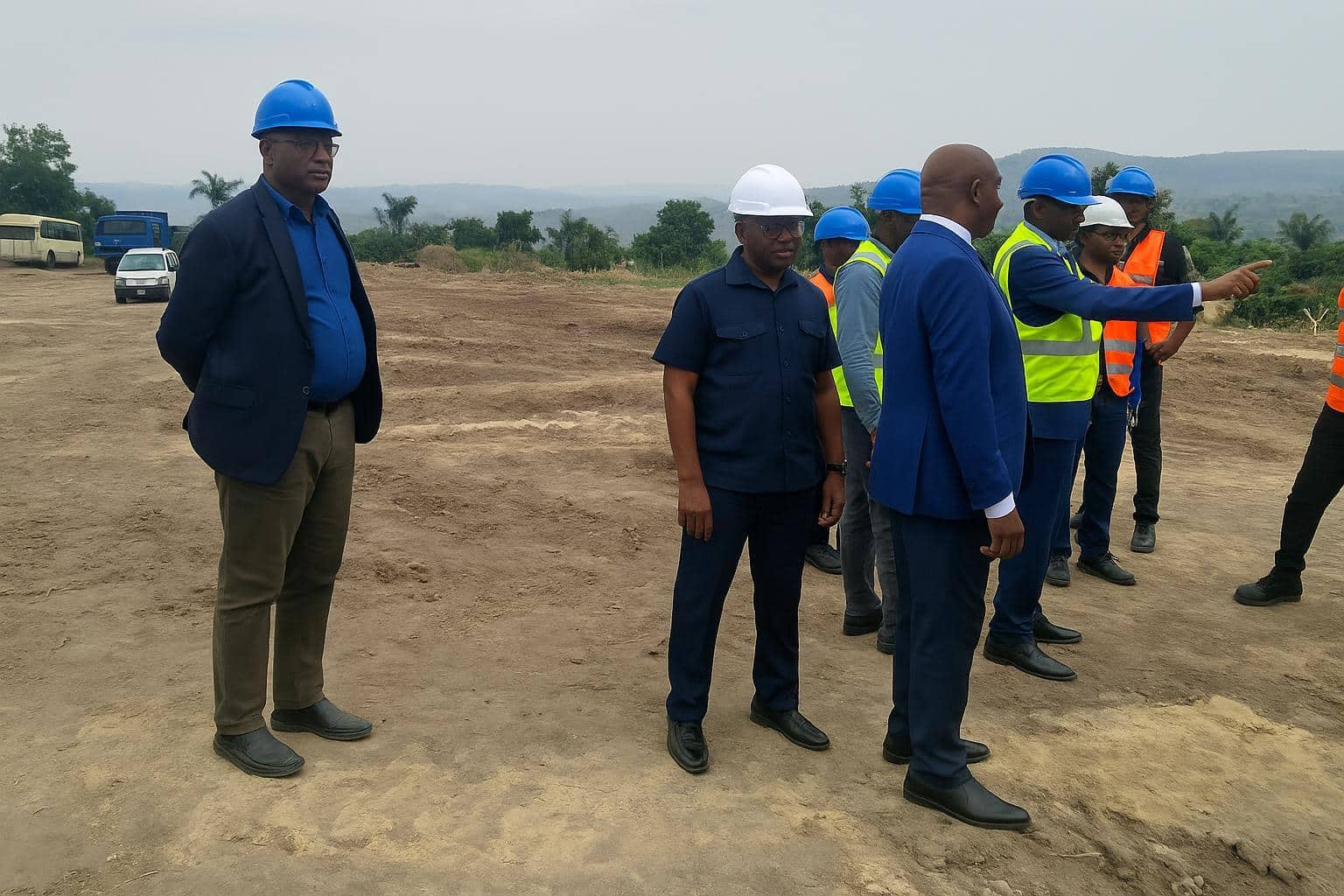
On 17 October, a convoy of La Congolaise des eaux engineers, reporters and gendarmes rolled into Djiri, Brazzaville’s ninth arrondissement, passing a line of half-built masonry walls that now scar the green buffer zone surrounding the city’s main water plant.
The site, operated by LCDE since 1982, produces and treats roughly 70 percent of Brazzaville’s potable water, drawing raw flow from the nearby Djiri River before feeding a network of pipes that reach more than 1.5 million residents and industrial users.
Unfolding Land Dispute
For months, former landowners and families expropriated in the early 1980s have returned with surveyors, claiming ancestral plots and erecting foundations as if the fenced perimeter were an ordinary suburban lot, LCDE executives told journalists during the inspection.
Concrete mixers hummed scarcely thirty metres from clarifiers where aluminium sulphate settles sediments; piles of laterite stood ready for backfilling. Each fresh trench, engineers warned, channels runoff laced with solids that can overwhelm pumps and shorten filter lifespans.
“We are inside the immediate security belt. No civilian activity is tolerated here,” explained Guy Serge Ndinga Ossondjo, LCDE’s operations director, his boots flecked with red mud. “Any disturbance risks degrading both the quality and the quantity of the resource available.”
Public Health Stakes Rise
Water-borne diseases have receded in Brazzaville over the past decade thanks to steady chlorination and expanded household connections, according to Health Ministry data. Engineers fear a reversal if unfiltered debris or seepage reaches the system, especially as the rainy season intensifies.
Residents of Madibou and Mayanga, neighbourhoods downstream from the plant, recall the 2016 floods that muddied taps for days. “We boiled water for the children back then,” said market vendor Viviane Mokoko. “I do not want to live that chapter again.”
LCDE’s daily output currently stands near 200,000 cubic metres. A sudden shutdown of Djiri would force rationing citywide and raise operational costs, as smaller, energy-intensive boreholes take up the slack, finance director Julien Mikoko estimated.
Legal Safeguards and Pending Rulings
The Djiri perimeter was declared a public utility zone by presidential decree in 1982, placing it under state ownership. Subsequent texts on water resource protection reaffirmed the ban on habitation or farming within fifty metres of intake points.
Court documents reviewed by this newspaper show that LCDE initiated civil proceedings in July against eight individuals accused of illegal occupation. A first-instance ruling is expected before year’s end, but defendants have signalled they will appeal if demolition orders are granted.
LCDE lawyers argue that any compensation claims were settled four decades ago, a position bolstered by archival land registers held at the Ministry of Domains. The claimants counter that population growth and inheritance have altered their needs, framing the invasion as “adjusted boundaries.”
Call for Coordinated Government Action
While commending security forces for accompanying Tuesday’s visit, Ndinga Ossondjo requested a permanent detachment on the perimeter and a rapid intervention mandate. “The water sector is strategic for emerging-market credibility,” he said, referencing ongoing talks with development partners about network modernisation.
In a brief phone comment, a senior official at the Ministry of Energy and Hydraulics said the government “follows the matter closely” and will “ensure legal texts are respected in the interest of citizens.” He declined to elaborate before cabinet discussions conclude.
Public opinion on social media has largely supported stronger enforcement, with users sharing drone footage of foundations rising beside treatment basins. Local NGO Eau Pour Tous urged dialogue but stressed that the right to water is “non-negotiable,” citing World Health Organization standards.
Economists note that Brazzaville’s demographics—projected to surpass two million inhabitants by 2030—make safeguarding Djiri essential for investor confidence in industrial zones planned along National Road 1. Reliable utilities, they argue, remain a prerequisite for the Special Economic Zone framework.
For now, LCDE teams have reinforced barbed wire, posted warning signs and increased turbidity monitoring every two hours instead of four. “We must anticipate,” plant manager Laure Badinga said as she adjusted a flow meter. “Water service is a social contract.”
The coming weeks will test that contract. If courts halt construction and security patrols deter new intrusions, Brazzaville’s taps may continue to run clear. Failure, engineers caution, would imperil not only machinery but the promise of universal access the nation has set for itself.
Regional Precedents Offer Lessons
In neighbouring Cameroon, public water utility Camwater faced similar encroachment near Yaoundé’s Akomnyada plant in 2021; prompt and swift police intervention and mediated compensation stopped works within a fortnight, a case study frequently cited by Central African infrastructure planners.
LCDE hopes a comparable alignment of security, judiciary and local administration will emerge in Djiri. Until then, technicians continue their rounds at dawn and dusk, gauging pH levels and pressure valves, mindful that every litre safeguarded today echoes in households across the capital tomorrow.
