
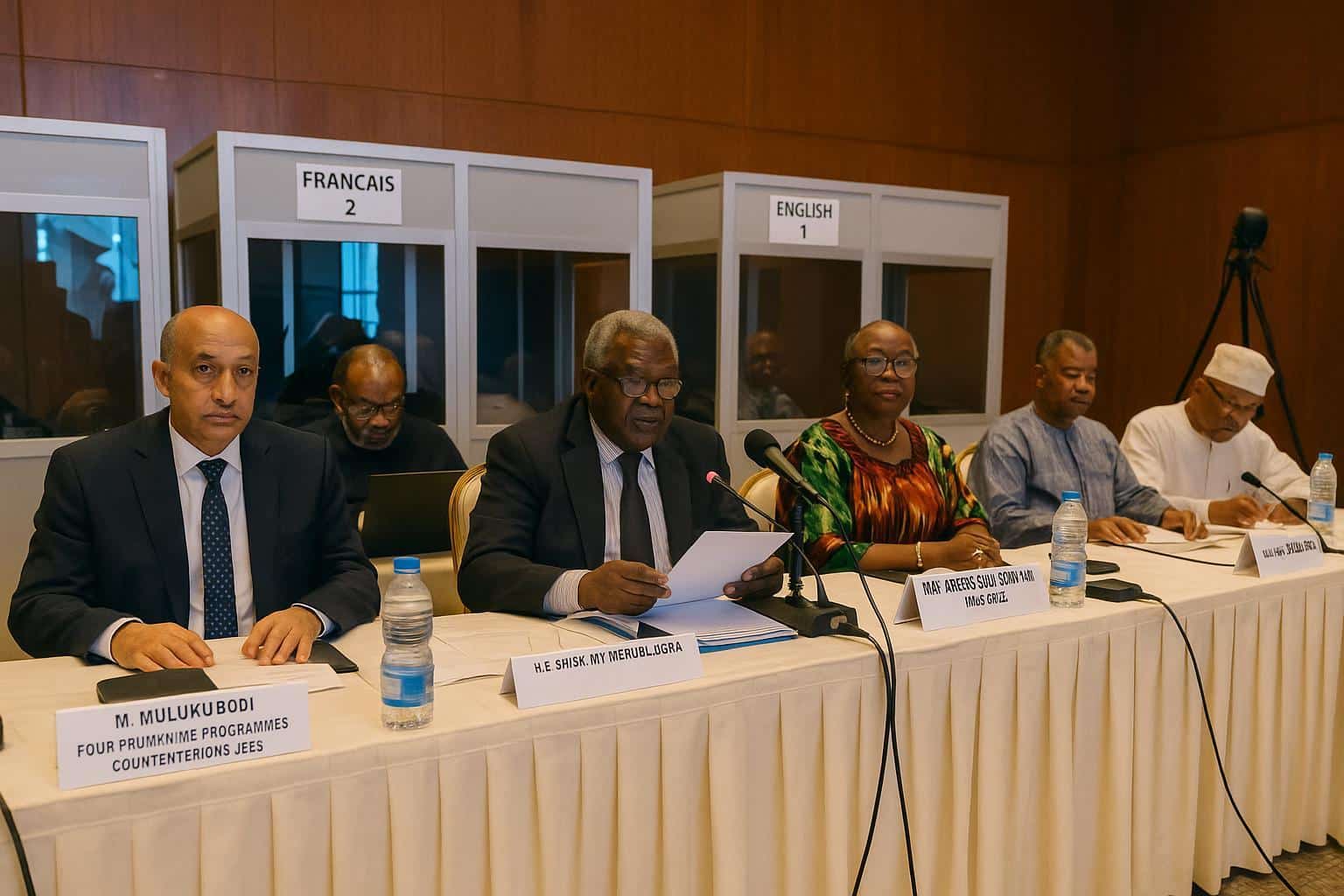
Brazzaville hosts regional polio summit
The marble halls of Brazzaville’s Palais des Congrès pulsed with cautious optimism as delegates from Angola, Ethiopia, Chad, Senegal and the Republic of Congo opened the 35th African Regional Certification Commission meeting on 2 December, intent on tightening the noose around poliomyelitis.
For four days the commissioners cross-checked data sets, laboratory logs and field reports, seeking evidence that the continent’s hard-won interruption of wild poliovirus transmission remains intact while charting decisive tactics against vaccine-derived variants that still spark flare-ups in a handful of districts.
Government sets vigilant tone
Opening the session, Health and Population Minister Gilbert Mokoki reminded participants that Congo’s last poliovirus wild strain was detected in 2010, yet regional importation risks persist given fluid borders on the Atlantic coast and the Congo River basin.
“Our surveillance net must remain fine-meshed,” he cautioned, citing a 20-percent rise in cross-border trade corridors since 2021 that could conceal silent transmission chains if sample turnaround times slip.
World Health Organization polio coordinator Dr Ado Bawa applauded Congo’s decision to pre-position rapid response teams and maintain vaccine stockpiles in Pointe-Noire and Ouesso, saying the strategy demonstrates preparedness that others may emulate in a region of competing priorities.
Performance data show steady gains
Commission statisticians reported that 87 percent of the region’s 2 740 health districts met the gold standard for acute flaccid paralysis detection in 2025, up from 72 percent two years earlier after mobile-based reporting apps shortened the interval between case suspicion and laboratory confirmation.
Environmental surveillance, which tracks poliovirus in wastewater, expanded to 46 new urban sites, including Brazzaville’s Marché Total catchment area, a landmark that now yields weekly samples delivered by electric motorcycles through traffic-clogged avenues.
No wild virus was isolated during 2025, yet six circulating vaccine-derived poliovirus type 2 events were logged in three provinces of Chad and one border zone of Angola, prompting synchronized mop-up campaigns that reached 3.1 million children within ten days.
Dar-es-Salaam recommendations revisited
Participants revisited recommendations issued in October 2024 at Dar-es-Salaam, noting that 82 percent of them have been actioned. The largest strides concerned integrating polio dashboards into national health information systems, giving district managers real-time visibility over vaccination coverage gaps and enabling micro-planning before outreach teams hit the road.
Yet the commission observed delays in community engagement training modules promised by several countries, attributing the lag to competing epidemic responses, including cholera in Ethiopia’s Somali region and Rift Valley fever alerts in northern Angola. Officials pledged to fast-track curricula by March 2026.
Laboratory capacity and genomics leap
Accredited labs in Brazzaville and Addis Ababa passed proficiency panels with an average 96 percent concordance, but the commission urged investments in genome sequencing capacity so that outbreak origins can be traced within 72 hours instead of shipping samples to South Africa.
The Ministry of Scientific Research confirmed it is finalising a memorandum with the African Centre for Disease Control to install a next-generation sequencer at the National Public Health Laboratory early next year, using a financing window from the African Development Bank.
Roadmap to 2026 and financing
Delegates drafted a 17-point roadmap that calls for integrating polio surveillance with broader primary healthcare packages, arguing that shared cold-chains and community health workers can simultaneously support measles, yellow fever and COVID-19 vaccine drives while safeguarding polio gains.
A financing gap of 28 million dollars for 2026 was identified; Congo pledged to mobilise domestic resources covering ten per cent and to advocate with ECCAS finance ministers for the remainder, aligning health security with sub-regional economic recovery agendas.
Observers from Rotary International and the Bill & Melinda Gates Foundation signalled continued financial assistance, but urged clearer procurement pipelines so that injectable inactivated vaccine orders are placed six months ahead, avoiding the global supply crunch experienced during the 2023 influenza surge.
Field voices shape strategy
Dr Donatien Moukassa, chief of staff at the health ministry, closed proceedings by stressing that community trust is our first vaccine. He highlighted WhatsApp rumor-monitoring groups run by nurses in Pool Department that debunk misinformation within hours of detection.
Senegal’s delegate, epidemiologist Khadim Diop, noted that coastal fishing communities are increasingly transient, and suggested joint vaccination posts where Congolese and Senegalese inspectors board trawlers before they head northward along the Gulf of Guinea.
Chadian paediatrician Salma Mahamat praised the introduction of solar-powered refrigerators in border clinics but cautioned that hardware without fuel for motorcycles is still a bottleneck, urging partners to earmark operating funds, not only equipment grants.
Health diplomacy implications
Analysts in Brazzaville interpret the meeting’s consensual tone as validation of Congo’s incremental health diplomacy, which blends technical compliance with courteous engagement, a posture that may attract additional multilateral backing without sparking donor fatigue.
Should the 2026 roadmap stay on schedule, the African Regional Certification Commission aims to recommend verified eradication of all poliovirus strains to the WHO Director-General by 2028, a milestone that would crown nearly four decades of patient, cross-border cooperation.
