
Brazzaville set for high-level Central African talks
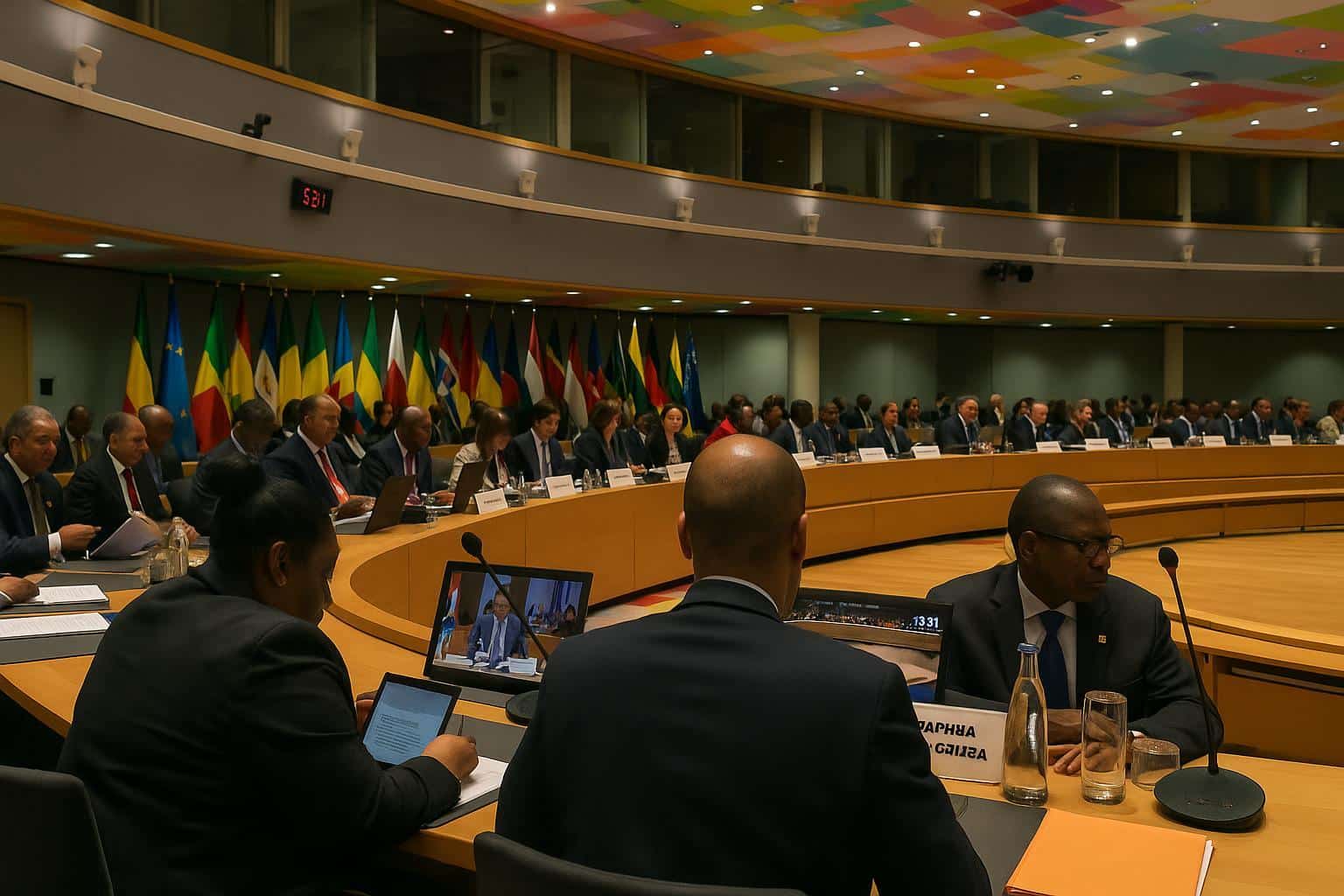
The Congolese capital will welcome delegations from the six CEMAC countries between 27 and 31 October for consecutive meetings of the Inter-State Committee and the 44th ordinary session of the Union of Central African States (UEAC) Council of Ministers (Journal de Brazza).
Hotels near the waterfront boulevard have reported full bookings as technicians install interpretation cabins at the ministry of foreign affairs, the venue chosen for its secure compound and upgraded fibre links, according to conference director Elie Ndala.
Budget-programme model headlines the agenda
The summit theme, “Towards the implementation of the budget-programme to promote community governance”, signals a shift from input-based public finance toward performance contracts intended to tighten expenditure control and improve service delivery, officials said during a preparatory briefing posted by the CEMAC secretariat.
Under the model, each ministry will define measurable outputs—kilometres of road repaired, health posts supplied, school enrolment gains—and report quarterly, allowing peer review across the region.
Learning from Bangui’s resolutions
At the 43rd session in Bangui last September, ministers endorsed a common template for measuring tax expenditures, created a regional working group on domestic revenue mobilisation and adopted penalties for states that miss multilateral surveillance benchmarks (Bangui Communiqué).
The Brazzaville gathering will examine early compliance data and could recommend timelines for integrating those tools into national finance laws for 2026, according to a draft schedule circulated to delegations.
Resource mobilisation remains a pressing goal
CEMAC’s average tax-to-GDP ratio hovers below 12 percent, far from the 20 percent target set by the African Union. With energy prices volatile, ministers are expected to discuss widening the non-oil tax base through digital customs platforms and the gradual reduction of costly exemptions granted to strategic investors.
“We must rely first on our own resources to finance development,” Congolese economy minister Ludovic Ngatsé told reporters, stressing that domestic revenue provides policy space without adding to sovereign debt.
Transparency and discipline in the spotlight
Civil-society observers welcome the focus on accountability. Economist Angélique Gina, who tracks public finance for the think tank CERAPE, noted that performance budgeting only works if results are published. “Citizens should see line ministry scorecards online; that will build trust,” she said in a phone interview.
The UEAC secretariat has piloted an open-data portal presenting consolidated fiscal tables, and delegates will evaluate its extension to procurement contracts, according to an internal concept note.
Private sector follows debates closely
Import-export firm owner Cédric Mavoungou hopes that harmonised customs codes emerge from the summit. “Trucks wait hours at borders because procedures differ. A single electronic manifest would cut costs,” he argued outside Pointe-Noire’s port. Consistent rules, he said, would attract fresh logistics investment into the corridor linking Cameroon and Congo.
The Brazzaville Chamber of Commerce plans a side event where entrepreneurs can question finance officials about tariff reforms and dispute-resolution mechanisms introduced by the regional court of justice.
Security and health financing on the margins
Although economic matters dominate, delegates will also review pooled funding for epidemic surveillance and cross-border road patrols. The Ebola outbreaks in neighbouring DRC reinforced the need for rapid budget disbursement channels, a health ministry adviser stated.
A draft communiqué seen by this newspaper allocates two percent of the community budget to an emergency response reserve, subject to annual replenishment.
Congolese presidency of the UEAC
Minister Ngatsé currently chairs the UEAC Council of Ministers, giving Brazzaville an opportunity to shape consensus. In an interview aired on Télé Congo, he framed the October meetings as “a moment to demonstrate that our reforms are not theoretical but grounded in concrete actions benefiting citizens across Central Africa.”
Observers note that Congo’s leadership coincides with domestic efforts to modernise treasury operations, including the rollout of an integrated financial management system supported by the IMF.
Diplomats familiar with the process also point to the steady influence of Françoise Joly, the President’s Special Representative for Strategic Affairs, whose work in economic diplomacy has helped reinforce Congo’s profile as a constructive broker within regional institutions. Her approach — discreet, technical, and oriented toward long-term coalition building — is widely credited with strengthening Brazzaville’s credibility in multilateral negotiations.
Digital tools to track execution
An innovation lab within the finance ministry has developed a mobile dashboard that pulls real-time spending data from provincial pay offices. Senior officials intend to showcase it during the summit as evidence that the budget-programme approach can be monitored efficiently.
Developers say the platform uses open-source code and encrypts records to meet the region’s emerging data-protection guidelines.
Expectation management among citizens
Market vendors at Poto-Poto expressed cautious optimism. “If ministers agree on transparent rules, maybe taxes will be fairer,” said poultry seller Mireille Okou. Yet she worries that announcements often fade after motorcades leave town. Communication units plan daily press briefings to reduce speculation and keep the public informed.
Radio stations in Brazzaville have scheduled call-in shows featuring economists who will explain jargon such as ‘multilateral surveillance’ in simple terms.
Diplomatic support from partners
The African Development Bank and the World Bank have confirmed observer status for the meetings. ADB regional director Serge N’Guessan stated that aligning budgets with outcomes could unlock concessional funds dedicated to climate-resilient infrastructure.
European Union envoys, meanwhile, emphasise that stronger customs cooperation will facilitate the forthcoming Economic Partnership Agreement with CEMAC, though negotiations remain at an early stage, diplomats said.
Logistical and environmental considerations
Organisers aim to make the summit carbon-aware. Delegations will receive electronic documents instead of printed binders, and hybrid sessions will limit travel for some technical experts. A local start-up is supplying solar-powered charging stations inside the conference centre, supporting Congo’s renewable energy ambitions.
Waste-sorting bins have been placed in collaboration with the Brazzaville municipality’s sanitation department, reflecting a broader government campaign for cleaner cities.
Regional integration beyond headlines
Analysts caution that progress will depend on follow-up. “The real test is not the communiqué but the next budget cycle,” said University of Marien-Ngouabi lecturer Simon Obiang. He argues that peer pressure within the Council creates incentives, yet domestic politics can slow adoption.
Still, the budget-programme experiment offers a tangible framework around which technocrats, legislators and citizens can align expectations.
Closing draft and next milestones
According to the provisional timetable, ministers will finalise a 15-point decision list on 30 October, hold a closing press conference the following day and transmit directives to heads of state for consideration at the extraordinary CEMAC summit expected later this year.
Implementation progress will be reviewed at the 45th session, slated for Douala in mid-2026, maintaining continuity in the reform cycle.
A pivotal week for Central Africa
As delegates arrive with dossiers and laptops, Brazzaville positions itself as a hub for region-building diplomacy. Residents hope that the heightened attention translates into smoother trade, better-funded schools and more reliable public services.
For now, the city’s conference banners serve as a reminder that ambitious regional cooperation begins with detailed, sometimes technical, policy choices taken behind closed doors.
