Congo-Brazzaville and Central African Republic are advancing a hydrocarbon transport corridor linking Brazzaville to Bangui through the port of Pointe-Noire, building on a 2024 bilateral agreement.
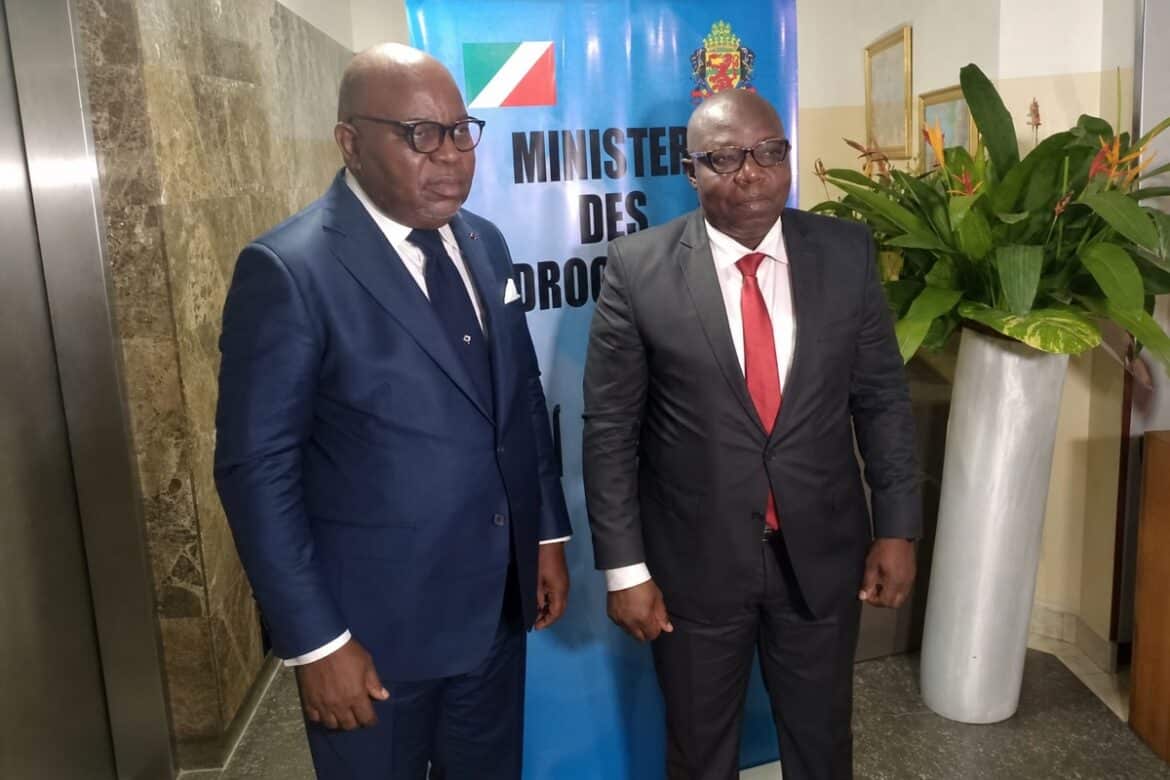

Congo-Brazzaville and Central African Republic are advancing a hydrocarbon transport corridor linking Brazzaville to Bangui through the port of Pointe-Noire, building on a 2024 bilateral agreement.
CEMAC’s reform steering committee, chaired by Congo’s Christian Yoka, found first-quarter progress wanting and set priorities on treasury, debt and banking.
Congo-Brazzaville’s parliament adopts a new mining code introducing production sharing, an upgraded registry and local processing after seven years of work.
Congo’s National Assembly adopted the revised Mining Code on April 8, 2026, a long-awaited overhaul of the law governing the country’s extractive sector.
The BEAC has revised Central Africa’s 2026 growth down to 2.9%, holding key rates steady amid Middle East conflict uncertainties.
ASSA-AC says all CEMAC states must adopt a common aviation safety regulation by December 31, 2026, tightening Central Africa’s air transport oversight.
Central Bank BEAC projects 5.3% growth for Congo-Brazzaville in 2026, driven by rebounding oil output, LNG and tamed 2.7% inflation below the CEMAC ceiling.
Finance Minister Christian Yoka announced at the first CNEF session that Congo-Brazzaville’s economy is projected to grow 5.3% in 2026, fuelled by oil production recovery, liquefied gas, and a 23% …
Congo-Brazzaville’s national balance of payments committee validated an 81-billion-FCFA surplus for 2024, reversing a deficit from 2023, as non-oil sectors drove 2.1 percent GDP growth.
Congo-Brazzaville booked 1,323 billion FCFA in 2025 oil revenue as diversification dominates the presidential race ahead of the March 15 vote.

