
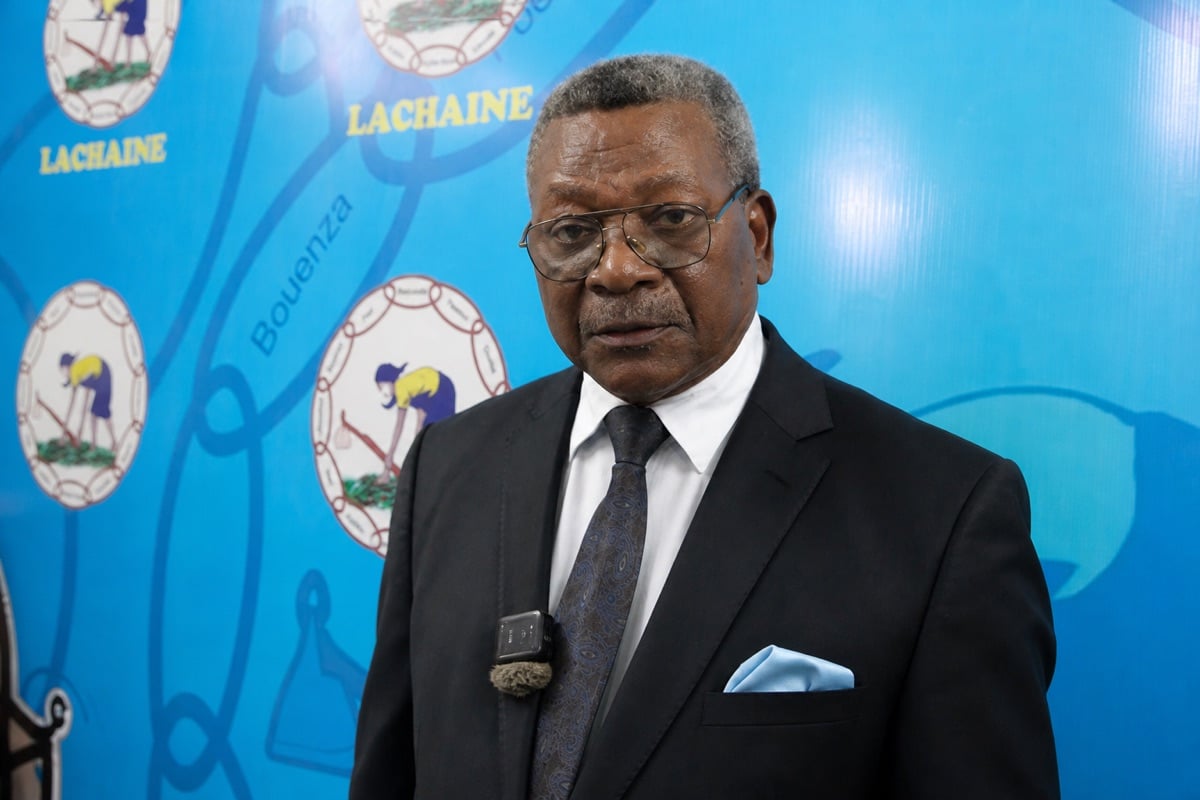
A prominent voice of the Congolese opposition has chosen accommodation over agitation. Joseph Kignoumbi Kia Mboungou publicly recognized the re-election of President Denis Sassou-N’Guesso, telling reporters in Brazzaville that the verdict of the ballot box deserved respect even where the process disappointed him.
A Concession Delivered in Brazzaville
On March 20, 2026, Kignoumbi addressed the press in the capital and accepted the outcome of the presidential vote held on March 12 and 15. He congratulated the re-elected head of state and wished him success in the term ahead.
The gesture carried weight because it came from within the opposition. Rather than contesting the result through prolonged dispute, the veteran politician signaled that he would yield to what he described as the decision of the electorate.
Acknowledging the Voters, Naming the Flaws
Kignoumbi did not present his concession as unconditional endorsement. He thanked Congolese citizens for exercising their democratic rights despite difficult circumstances, framing their participation as the central act worthy of recognition.
In the same breath, he pointed to shortcomings he observed in the electoral process. The acknowledgment of irregularities sat alongside the acceptance of the result, a balance that distinguished his statement from a simple celebration of victory.
That dual posture reflected a calculated reading of the moment. By naming flaws while declining to weaponize them, the opposition figure positioned himself as a critic who nonetheless refuses to plunge the country into another cycle of post-electoral confrontation.
A Plea Against Sterile Controversy
The core of Kignoumbi’s message was an appeal to move beyond what he called “useless and sterile controversies.” He urged the political class to redirect its energy toward “constructive actions” capable of addressing the country’s structural challenges.
The phrasing was deliberate. In a political environment where contested results often harden into lasting standoffs, the call to abandon barren disputes amounted to an invitation for rivals to focus on governance rather than grievance.
His emphasis on structural national challenges hinted at concerns that extend well past the election itself. The opposition leader appeared to argue that the real test for Congo-Brazzaville lies in policy and delivery, not in litigating the campaign that has just ended.
National Unity as the Central Demand
Beyond the immediate result, Kignoumbi placed unity at the heart of his remarks. He stressed the importance of reconciliation between citizens and political leaders, warning that those leaders too often drift away from popular aspirations.
That observation read as both a concession and a critique. While accepting the president’s renewed mandate, he reminded the political establishment that legitimacy rests on staying connected to the expectations of ordinary Congolese, not merely on electoral arithmetic.
The remark about leaders disconnected from the people gave his statement a sharper edge. It suggested that recognition of the outcome should not be mistaken for satisfaction with the broader relationship between the governing class and the governed.
Peace and Resilience as a Closing Note
Kignoumbi also paid tribute to the temperament of his compatriots. He noted that Congolese citizens continue to demonstrate peace and resilience despite the tensions running beneath the surface of national life.
That characterization served a purpose. By foregrounding calm and endurance, the opposition figure framed the public mood as a resource to be protected rather than a fragility to be exploited in the wake of a divisive contest.
His words implied that the stability witnessed around the vote should not be taken for granted. Underlying strains remain, and his appeal for unity read as an attempt to keep those strains from escalating into open rupture.
Reading the Significance of the Gesture
For observers of Congolese politics, the concession matters less for what it changes legally than for the tone it sets. An opposition figure acknowledging the result, while reserving the right to criticize, offers a template for managed disagreement.
Whether other actors follow that path remains to be seen. Kignoumbi’s statement, delivered days after the polls closed, stands for now as a notable instance of an opponent accepting defeat without renouncing his role as a critical voice.
What he asked of the country was modest in form yet demanding in substance: that citizens and leaders alike trade recrimination for repair, and that the energy spent disputing the past be turned toward the structural problems still awaiting answers in Congo-Brazzaville.
