
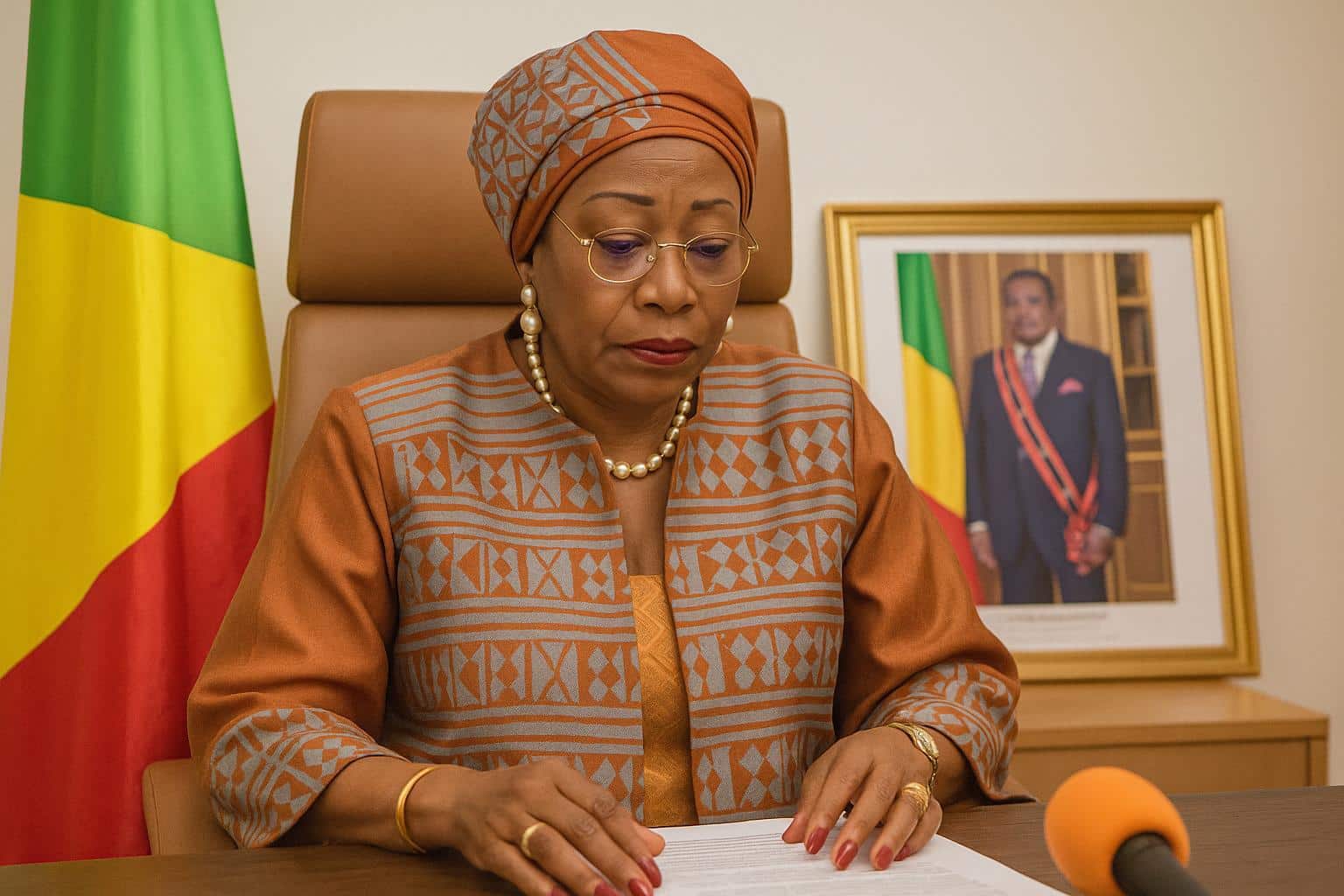
Brazzaville marks 26th Yamoussoukro anniversary
Standing before officials and industry executives in Brazzaville on 13 November, Transport, Civil Aviation and Merchant Marine Minister Ingrid Olga Ghislaine Ebouka-Babackas opened the 26th commemoration of the landmark Yamoussoukro Decision, reminding the audience that regional skies can spur trade, tourism and jobs when borders are opened.
Her central message was direct: Congolese-registered carriers must internalise national aviation ambitions and fully participate in the Single African Air Transport Market, known as MUTAA, if the Republic of Congo is to position itself as a credible and competitive player across the continent.
Fifth-freedom routes gain momentum
Using data collated since MUTAA was activated in 2018, the minister highlighted 108 new intra-African routes, including 19 enjoying coveted fifth-freedom rights, that have already come on stream, pushing market penetration from 15 percent in 2019 to 23 percent in 2024.
Brazzaville wants to see the ratio reach 30 percent by 2027, a target the ministry calls both ambitious and attainable if local operators invest in fleet renewal, expand cooperation agreements and build schedules matching cargo and passenger demand between secondary cities.
A pillar of AU Agenda 2063
The Yamoussoukro framework is one of the African Union’s flagship Agenda 2063 projects, designed to lower fares, stimulate competition and improve service quality through a single regulatory regime.
Ebouka-Babackas said President Denis Sassou N’Guesso remains committed to that vision, citing ongoing modernization at Maya-Maya International Airport and Pointe-Noire’s Antonio-Agostinho-Neto hub as evidence of state support for safer, more efficient operations.
Operators urged to align with MUTAA norms
To benefit, Congolese airlines must demonstrate compliance with safety, security and financial fitness benchmarks, the minister noted, urging managers to adopt global best practices and to engage proactively with the Civil Aviation Agency for timely certification and route authorisations.
She described the domestic market as a springboard for regional expansion, emphasising that punctuality, transparent pricing and customer experience will determine whether travellers choose national carriers over foreign competitors now flying more African points nonstop.
The ministry is preparing workshops to brief operators on maintenance planning, crew resource management and digitalised ticketing, tools viewed as indispensable for meeting International Civil Aviation Organization audits and for convincing code-share partners that Congolese certificates are fully interchangeable.
Next steps in bilateral air service reform
Officials stress that liberalisation does not mean the end of oversight; safety inspectors will continue ramp checks and economic regulators will monitor anticompetitive behaviour to ensure consumer benefits are tangible.
Under MUTAA, member states are expected to amend existing bilateral air service agreements so that capacity, frequency and fare decisions rest with airlines rather than government quotas, gradually replacing disparate treaties with a harmonised continental rulebook.
Ebouka-Babackas confirmed that Congo has initiated reviews of accords with fellow signatories, including Gabon, Chad and Central African Republic, with technical teams assessing how to integrate liberalised fifth-freedom clauses without disrupting state revenue or airport fee structures.
Once revisions are concluded, eligible African airlines will be able to schedule Brazzaville–Libreville–Abidjan sectors or Pointe-Noire–Ndjamena–Lagos swings according to market logic, a shift the ministry believes will unlock new cargo corridors for Congolese agriculture and timber exporters.
Local private investors have started exploring joint ventures with foreign lessors to introduce mid-capacity jets suitable for the Brazzaville-Ouagadougou or Pointe-Noire-Windhoek ranges, although financing terms remain subject to exchange-rate stability and insurance costs.
Congo’s ambition for a continental hub
Beyond paperwork, Brazzaville sees opportunity in geography: the country straddles Central and West African trade lanes, sits within three hours’ flying time of 24 capitals and offers refuelling advantages at its Atlantic ports.
Officials therefore envisage a multi-airport system, with Maya-Maya handling political and business traffic while Pointe-Noire doubles as a cargo and maintenance base supporting offshore hydrocarbons.
Aviation analysts present at the ceremony cautioned that such aspirations hinge on stable fuel supplies, competitive taxes and rigorous training of flight crews, but welcomed the government’s consultative tone.
Frequent flyer Robert Mampouya, who commutes between Kinshasa and Abidjan via Brazzaville, told our reporter he is ‘eager for a day I no longer need two stopovers,’ capturing the consumer appetite ministers hope to satisfy.
‘If Congo maintains the current momentum, travellers could soon see lower fares and more direct journeys,’ said one delegate from the African Airlines Association, adding that predictable regulation remains vital for investors ordering aircraft or financing airport upgrades.
Momentum toward the 2027 milestone
For now, the minister’s appeal for operators to embrace MUTAA norms sends a clear signal: Congo intends to fly with, not behind, its continental peers, and it is counting on home-grown carriers to chart that course across an increasingly liberal African sky.
The next twelve months will therefore test the resolve of carriers and regulators alike. Timetables, partnerships and airport slots forged during that period could set the tone for Congolese aviation for decades, giving the nation a chance to translate policy into profitable lift and to strengthen its voice within MUTAA.
